Report: SPT
How State Fragility Enabled the Reconfiguration of Regional Security and Influence Networks in the Horn of Africa and the Red Sea?
For years, eastern Sudan has experienced successive crises that intensified following the fall of Omar al-Bashir’s regime, deepened during the country’s transitional period, and reached their peak after the outbreak of war in April 2023. Although these crises appear, on the surface, to be domestic in nature, placing them within their broader geopolitical context reveals their close connection to a web of regional interests and an ongoing struggle for influence across the Horn of Africa and the Red Sea.
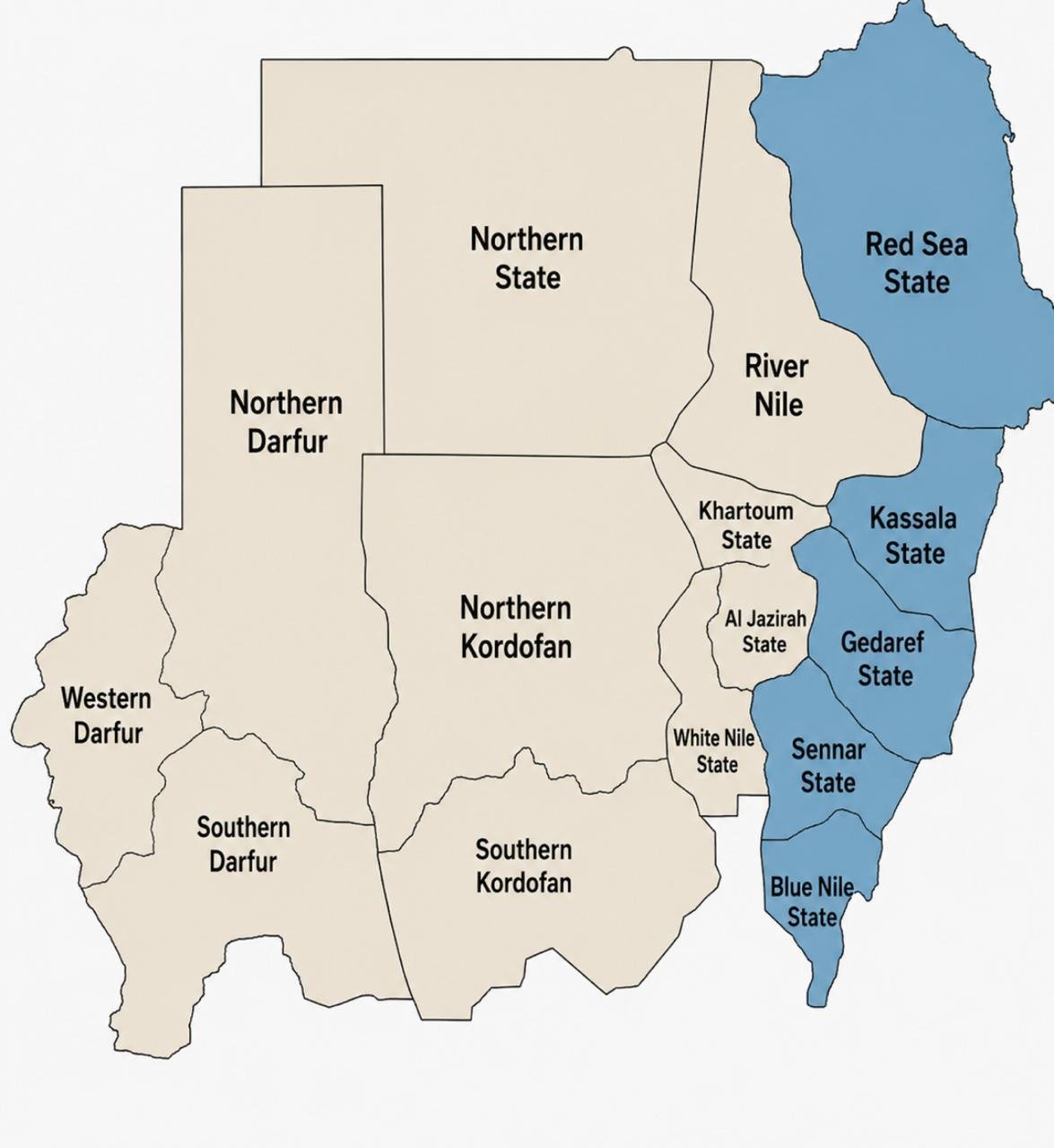
This report is built on the premise that the weakening of the Sudanese state has enabled regional powers to establish political and security networks across eastern Sudan, taking advantage of the region’s strategic location. In this context, “eastern Sudan” refers not only to the Red Sea, Kassala and Gedaref states, but to the broader geographic corridor stretching from the Halaib Triangle in the north to Blue Nile State in the south a strategic space where regional political and security interests increasingly intersect.
Within this framework, Egypt emerges as the regional actor with both the greatest capacity and the strongest incentive to leverage its longstanding influence inside Sudan. Cairo’s approach has consistently treated Sudan less as a sovereign state with an independent political will than as a strategic geographic hinterland one that provides access to Nile waters, natural resources, gold, livestock and a significant market while serving as an extension of Egypt’s broader strategic depth. This approach has largely rested on Cairo’s close relationship with the Sudanese military establishment. At the same time, Egypt’s strategic alignment with Eritrea has helped shape a broader sphere of influence across eastern Sudan that could have profound implications for Sudan’s stability and territorial cohesion. Within this arrangement, Eritrea’s western security belt constitutes one of the principal pillars reinforcing Egyptian influence within the geopolitical equations of the Red Sea and the Horn of Africa.
The report adopts an analytical framework that links the concepts of state fragility and regional security. It argues that when a state’s ability to exercise authority and manage internal balances declines, opportunities emerge for neighboring powers to expand their influence through political, security and local intermediaries. From this perspective, the transformations unfolding in eastern Sudan cannot be understood in isolation from the broader reconfiguration of power dynamics across the Horn of Africa and the Red Sea, where the national security calculations of neighboring states increasingly intersect with the institutional weakness of the Sudanese state.
Traditional Leadership Structures: A Gateway for Regional Influence
Egypt and Eritrea found in eastern Sudan a favorable environment for expanding their influence, benefiting from political and social structures entrenched during the three decades of the National Congress Party (NCP) government. Under Omar al-Bashir, traditional tribal administrations were incorporated into the state’s political control apparatus rather than functioning solely as community institutions. The regime cultivated extensive patronage networks within tribal communities through security institutions, most notably the “Tribal Security Office” affiliated with the National Intelligence and Security Service.
Following Bashir’s removal, these structures remained largely intact. Meanwhile, Sudan’s transitional authorities were progressively weakened through a combination of actions by remnants of the former regime, converging domestic interests and regional actors, resulting in a significant decline in the state’s ability to govern eastern Sudan. As institutional authority eroded, sections of the traditional leadership evolved from community representative bodies into instruments of political mobilization and pressure, creating ready-made channels through which regional powers could project influence.
This dynamic became evident during the blockade of the national highway leading to Port Sudan in protest against the Eastern Sudan track of the Juba Peace Agreement. It was further reflected in the tribal violence that later engulfed the Red Sea, Kassala and Gedaref states before spreading into Blue Nile State, while the central government proved unable to contain the escalating crisis.
Regional actors therefore did not need to construct entirely new influence networks. Instead, they capitalized on existing local structures that could be adapted to serve their strategic interests. Consequently, state fragility combined with the political and social legacy of the Bashir era became one of the principal drivers facilitating the expansion of regional influence throughout eastern Sudan.
Sudan in the Ethiopian–Eritrean Strategic Rivalry
Understanding Eritrea’s role in eastern Sudan first requires understanding Sudan’s place within the security calculations of both Asmara and Addis Ababa. Since Eritrea gained independence in 1993, relations with Ethiopia have been shaped by recurring tensions, culminating in the 1998–2000 border war before evolving into a prolonged strategic rivalry over regional influence and security arrangements across the Horn of Africa.
Within this context, Sudan acquired exceptional strategic importance because of its geographic position and its shared borders with both countries. Sudan has the potential to serve either as a source of political or military support for one side, or as territory from which opposition groups capable of threatening the other’s security could operate.
Consequently, both Eritrea and Ethiopia came to regard Sudan as an integral component of their respective national security strategies, seeking to prevent it from becoming a hostile front. Eritrea concentrated on securing its western frontier and preventing Sudanese territory from being used against it, while Ethiopia pursued a policy aimed at either neutralizing Sudan or drawing it into its own regional balance of power.
As a result, although Sudan has never been a direct party to the Ethiopian-Eritrean conflict, it has become an important variable in the security calculations governing relations between the two countries.
The Western Security Belt: Eritrea’s Strategic Doctrine toward Sudan
Eritrea is the regional actor most directly connected to eastern Sudan owing to geography, deep social linkages and shared security concerns. Since gaining independence in May 1993, Asmara has regarded its western frontier with Sudan as one of its most sensitive security zones, shaped by the legacy of its liberation struggle and persistent concerns that Sudanese territory could become a platform for threats to Eritrean national security.
Against this backdrop emerged the concept of the Western Security Belt a set of security policies and strategic arrangements designed to ensure that Eritrea’s western border with Sudan would never evolve into a source of instability or external threat. The doctrine became firmly established during the Bashir era, when Sudan hosted Eritrean opposition factions and armed movements, including the Eritrean Islamic Jihad Movement. These developments prompted Asmara to adopt a long-term strategy aimed at preventing the emergence of any hostile environment along its western frontier through a combination of military measures, intelligence operations and the cultivation of influence networks inside eastern Sudan.
The period following Sudan’s 1989 Islamist-backed coup proved particularly significant. The center of gravity of Sudan’s opposition gradually shifted from Cairo to Asmara, where the National Democratic Alliance launched much of its political and military campaign against Bashir’s government, transforming Eritrea into an influential actor in Sudan’s internal conflict.
As the Sudanese state’s capacity to exercise authority steadily declined particularly after the military coup of 2021 and the outbreak of war in 2023 the functional role of Eritrea’s Western Security Belt expanded beyond border protection to encompass the development of influence networks inside eastern Sudan through relationships with tribal administrations, political actors and local military forces. Eastern Sudan consequently evolved, from Asmara’s perspective, into a strategic space where national security concerns intersect with broader regional competition across the Red Sea and the Horn of Africa.
The evolution of Eritrea’s role in eastern Sudan cannot be understood in isolation from its strategic relationship with Egypt. Rather, it has developed within the framework of a broader strategic alignment driven by shared security interests in the Horn of Africa and the Red Sea, particularly amid disputes with Ethiopia over the Nile waters and the regional security architecture. Cairo views Ethiopia’s growing regional influence as a direct challenge to its strategic interests, while Asmara regards any expansion of Ethiopian power as a threat to its own national security, shaped by decades of rivalry between the two countries.
This strategic convergence has been clearly reflected in eastern Sudan. While Egypt has relied primarily on its influence within Sudan’s state institutions particularly the military establishment Eritrea has leveraged its geographic position and longstanding relationships with local actors in eastern Sudan. Together, the two countries have developed complementary networks of influence that shape political and security dynamics across the region.
Following the popular uprising that toppled Omar al-Bashir in 2019, cooperation between Cairo and Asmara deepened further. Both governments viewed the rise of Sudan’s civilian political forces during the transitional period as a challenge to their regional interests. Egypt, in particular, has historically anchored its influence in Sudan through its close relationship with the military establishment and has therefore regarded democratic transition as a direct threat to its ability to keep Sudan within its strategic sphere of influence and to safeguard interests linked to the Nile, natural resources, the Red Sea and regional geopolitics. Both Cairo and Asmara also feared that a diminished political role for Sudan’s military could facilitate closer ties between Khartoum and Addis Ababa on issues including border disputes, the Grand Ethiopian Renaissance Dam (GERD) and Red Sea security particularly given the support Ethiopian Prime Minister Abiy Ahmed extended to Sudan’s civilian transition.
Against this backdrop, both capitals supported domestic actors committed to preserving the political role of the Sudanese military. Egypt relied on an extensive local network that included traditional tribal administrations, armed movements, political actors, the military establishment itself and networks maintained by the Islamist movement within state institutions and society. Collectively, these actors provided Cairo with effective instruments for preserving its long-term strategic influence inside Sudan. The impact of these networks became visible during the Republican Palace sit-in in 2021, which paved the way for the military coup of 25 October, and later, following the outbreak of war in April 2023, when many of these forces became integral components of the Port Sudan alliance backing the Sudanese Armed Forces.
Although relations between Khartoum and Asmara were often strained during the Islamist era, shifting regional dynamics reordered strategic priorities. Eritrea consequently expanded its role in Sudan by capitalizing on its geographic proximity and longstanding connections in eastern Sudan, while increasingly aligning with Egypt’s broader objective of preserving the regional balance of power across the Red Sea and the Horn of Africa.
Egypt’s presence in eastern Sudan also cannot be fully understood without reference to the Halaib Triangle. Since the mid-1990s, the disputed territory has effectively functioned as an area of direct Egyptian control beyond the authority of the Sudanese state, providing Cairo with a permanent strategic foothold that has strengthened its position along the Red Sea coast and expanded its capacity to shape both the region’s security and economic dynamics.
Eritrea: From Political Influence to Military Presence
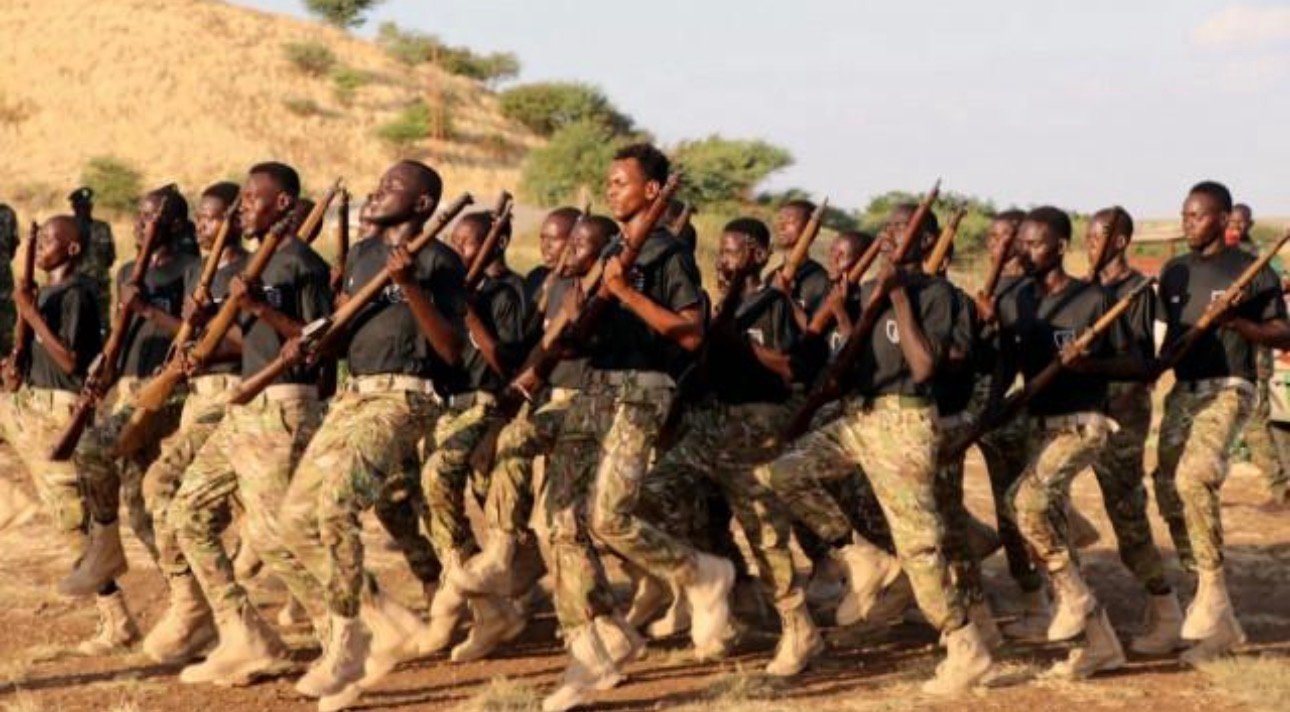
The outbreak of war on 15 April 2023 marked a significant turning point in Eritrea’s role in eastern Sudan. Its involvement evolved beyond political influence into a more direct security and military presence through the establishment of training camps on Eritrean territory for armed groups drawn from both Darfur and eastern Sudan, including forces affiliated with Beja constituencies and aligned with the Sudanese Armed Forces in their war against the Rapid Support Forces (RSF).
This transformation reflects the widening scope of Eritrea’s Western Security Belt doctrine from securing its borders to actively shaping security arrangements inside eastern Sudan in ways that reinforce Asmara’s regional influence and protect its strategic interests.
By contrast, Ethiopia approaches eastern Sudan through a different strategic lens, one driven primarily by its own security calculations.
Ethiopia: Security and Border Calculations
Ethiopia views Sudan’s Blue Nile State as an integral component of the security environment surrounding the Grand Ethiopian Renaissance Dam (GERD), owing both to its geographic proximity to the dam and its shared border with Ethiopia. Consequently, Addis Ababa’s interest in developments in the area extends beyond conventional border security to encompass any shifts that could alter the regional balance of power surrounding one of its most strategically important national projects.
At the same time, Ethiopia remains wary of the growing strategic alignment between Egypt, Sudan and Eritrea, fearing that eastern Sudan could evolve into a sphere of influence that enhances Egypt’s strategic presence along Ethiopia’s western frontier. These concerns are closely linked to the GERD dispute, as Ethiopian policymakers believe that any expansion of Egyptian influence in eastern Sudan could provide Cairo with additional strategic leverage in its broader regional competition with Addis Ababa.
The Red Sea: The Regional Dimension of the Competition
These developments demonstrate that the strategic significance of eastern Sudan extends well beyond its land borders. Its position on the Red Sea makes it a central component of the security calculations of neighboring states.
From Cairo’s perspective, eastern Sudan represents an extension of Egypt’s national security architecture and one of the principal pillars supporting its strategic interests. These include safeguarding access to Nile waters, protecting Red Sea security, securing natural resources including gold, livestock and raw materials and reinforcing the security of the Suez Canal. Within this broader framework, Eritrea’s Western Security Belt provides Egypt with additional geographic and strategic depth that reinforces its regional influence across both the Red Sea and the Horn of Africa.
Ethiopia, however, views this growing partnership as a development that could undermine the regional balance of power by providing Egypt with additional instruments of strategic pressure in its immediate neighborhood.
Eastern Sudan: A Geography Paying the Price
This analysis suggests that eastern Sudan has become part of a broader regional influence architecture led by Egypt, which remains the most influential external actor through its longstanding relationship with Sudan’s military establishment. Cairo’s objective has been to preserve Sudan within its strategic sphere of influence as a geographic hinterland offering vital security, economic and water-related advantages. Within this broader framework, Eritrea’s Western Security Belt performs an important functional role, drawing on Eritrea’s geographic position and its local influence networks across eastern Sudan.
Viewed through this lens, the convergence of Egyptian and Eritrean interests has transformed Eritrea’s Western Security Belt into an instrument that reinforces Egyptian influence while reshaping the balance of power across eastern Sudan, the Red Sea and the Horn of Africa, taking advantage of the institutional vacuum created by the 2021 military coup and the subsequent collapse of state authority.
These dynamics suggest that the future of eastern Sudan will ultimately depend not only on the ability of Sudanese actors to end the war, but also on the state’s capacity to re-establish a monopoly over political and security decision-making across the region. As long as Sudan’s institutions remain weak and fragmented, eastern Sudan is likely to remain an arena where competing regional interests converge, while its recurring crises continue to reflect geopolitical struggles that extend far beyond its borders.
The central question therefore remains: Can Sudan return to a democratic civilian path and regain control over the governance of its eastern frontier, or will it remain under the dominance of a military establishment strategically aligned with Cairo, leaving eastern Sudan as a theatre where regional powers continue to compete at the expense of an independent, civilian-led Sudanese state?