Report: SPT
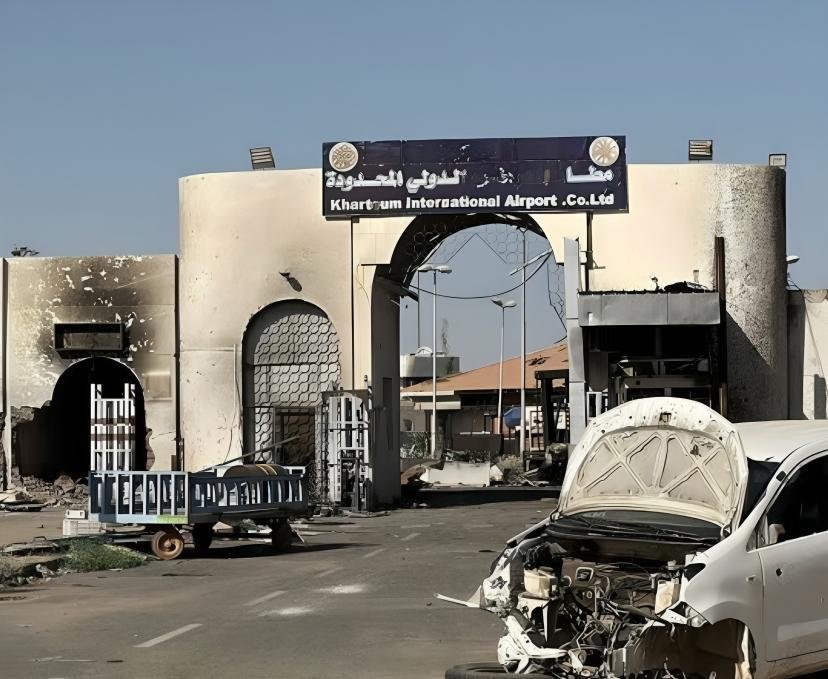
Military sources in Port Sudan and Nyala have dismissed accusations made by authorities in Port Sudan alleging Ethiopian involvement in the drone strike on Khartoum Airport on 4 May.
Officials in Port Sudan, including Foreign Minister Mohi El-Din, Information Minister Khalid Al-Aiser, and Sudanese army spokesman Brig. Gen. Asim Awad Abdel Wahab, told a press conference that security agencies possessed “conclusive evidence” showing that the drones involved in the attack had taken off from Bahir Dar airport in Ethiopia. They accused both Ethiopia and the United Arab Emirates of involvement in the strike.
Abu Dhabi and Addis Ababa categorically denied the accusations and reiterated support for de-escalation and political solutions in Sudan. Port Sudan has yet to present the evidence it claims to possess, while no independent international body has corroborated the allegations.
Well-placed sources in Port Sudan told SPT there was no evidence supporting the claims and that the ministers’ statements had not been fully agreed upon within the ruling establishment. The sources described a split in decision-making between the Foreign Ministry controlled by the Sudanese Islamist movement in coordination with Egypt and other state institutions.
Two sources close to the Rapid Support Forces (RSF) told SPT that the drones which targeted Sudanese army positions in Khartoum, including the airport strike on 4 May, had originated from inside Sudan, specifically Darfur, rather than Ethiopia.
One source said the attacks were retaliation for army drone strikes on civilian infrastructure, markets, hospitals and residential areas in Kordofan and Darfur. “Khartoum will not remain untouched while Darfur burns under Egyptian strikes launched from Al-Uweinat and Iranian drones,” the source said.
A former Sudanese army general, retired two months ago and speaking on condition of anonymity, also rejected the accusations against Ethiopia and the UAE. “The army knows the drones that attacked the airport came from Darfur,” he told SPT.
Asked why Ethiopia had been accused, the former officer replied: “These accusations did not originate in Port Sudan. They were interpreted and constructed there.”
The former general said the Islamist-linked war camp was coordinating closely with Cairo, which, according to him, was seeking to settle scores with Ethiopia by proxy. He added that Islamists seeking a return to power through war viewed escalation with Addis Ababa as an opportunity to remobilise Sudanese public opinion behind the rhetoric of “jihad against an external enemy”, echoing tactics used during the South Sudan war.
A Sudanese diplomat still formally in service, but currently residing in Cairo without official duties, described the anti-Ethiopian escalation as “manufactured”. He told SPT the campaign aimed to drag Sudan into confrontation with Ethiopia in support of Egyptian interests, both through direct escalation and through military support for Tigray forces fighting the Ethiopian federal government.
The diplomat said colleagues still working within Sudan’s Foreign Ministry in Port Sudan had expressed concern about Sudan being pushed into a regional war it could not sustain.
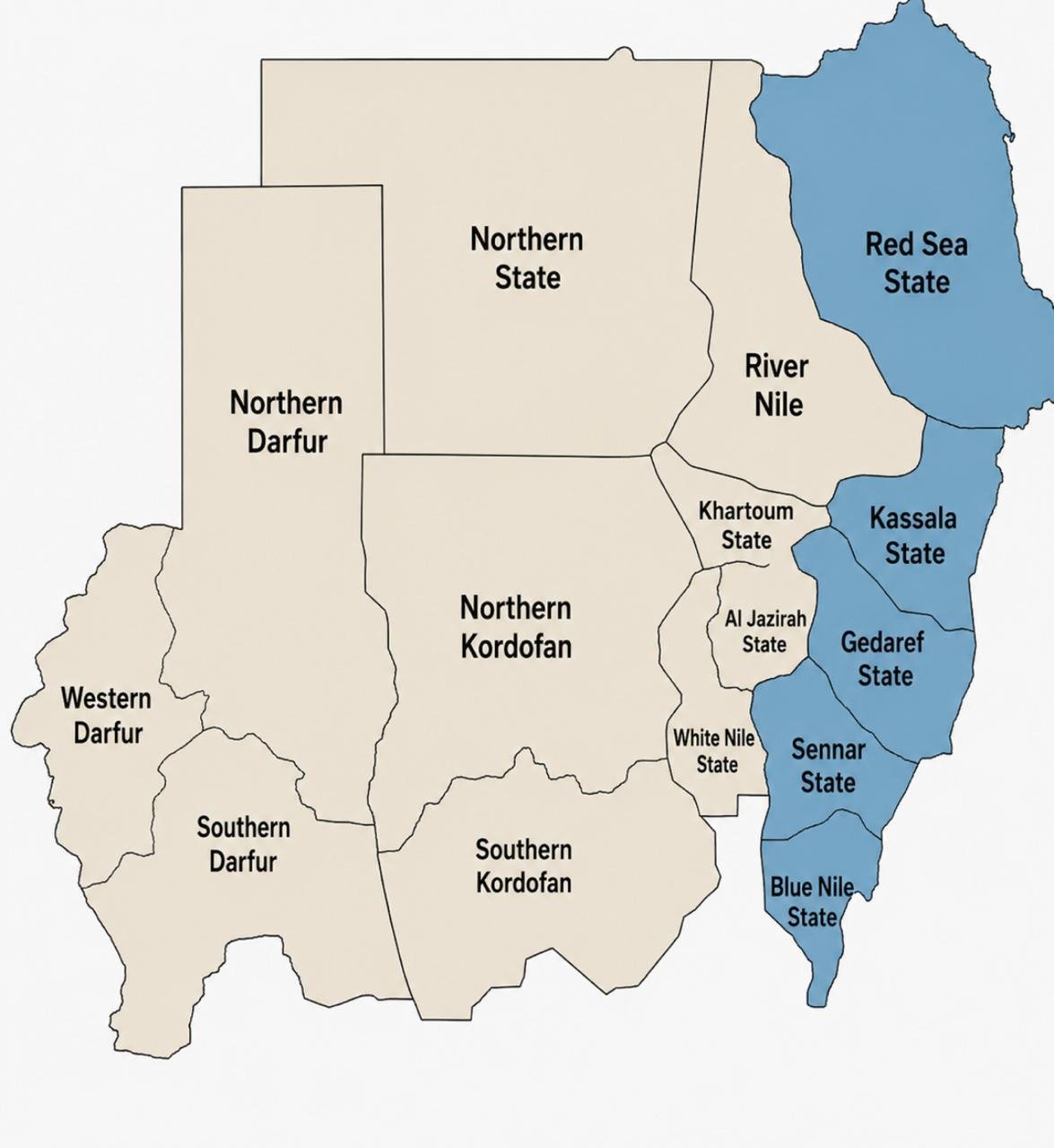
Tigrayan fighters have played an increasingly visible role in Sudan’s war since 2024. They fought alongside the Sudanese army as infantry units during battles in Sennar and Al-Jazira states in November 2024 and reportedly maintain a command centre in Wad Madani, the capital of Al-Jazira state.
Military sources said Tigrayan participation in the Sudan conflict stemmed from understandings with the Sudanese army involving reciprocal support in any future confrontation with Addis Ababa after Sudan’s war ends.
Some of the fighters are former members of the Ethiopian peacekeeping contingent deployed under the United Nations Interim Security Force for Abyei (UNISFA). Hundreds of Tigrayan personnel from that force were granted political asylum in Sudan after the outbreak of the Tigray conflict in late 2020, providing the Sudanese army with a trained manpower reserve.
In Cairo, a diplomat working within the Arab League told SPT that the Egyptian government was behind what he described as the fabrication of accusations linking Ethiopia to the Khartoum airport strike.
According to the diplomat, the plan involved securing an Arab League condemnation of Ethiopia in order to provide the accusations with regional and political legitimacy. He described the Arab League as “an Egyptian political and intelligence arm”. He added that several Arab states particularly the UAE blocked the initiative, preventing the issuance of the desired resolution, especially given that Arab League decisions require consensus rather than majority voting.
Separately, military and security sources in Port Sudan and Blue Nile state told SPT that approximately 2,600 Egyptian troops are currently stationed in Dongola and Merowe in northern Sudan. The forces reportedly arrived earlier this year by land and through Merowe airport.
A Sudanese army officer serving in Blue Nile state said Egyptian intelligence personnel were operating near the Ethiopian border under cover of mining concessions close to the area opposite the Grand Ethiopian Renaissance Dam (GERD). He said they were operating through two companies: “Nebta Mining” and “Alamein Group”.
Adam Mahdi, an RSF officer operating in Blue Nile, said Egyptian units in the region were moving in small technical teams specialising in reconnaissance drones, combat UAV operations and electronic warfare systems.
Mahdi added that interrogations of captured Sudanese officers and Tigrayan fighters indicated that Egyptian forces were highly mobile, particularly near the Ethiopian border. “The last confirmed sighting was near the Integration Projects east of Al-Rosaires before crossing the Al-Damazin bridge at night,” he said.
Residents in Minza and Madisisa in eastern Blue Nile also reported seeing groups of Egyptians in civilian clothing staying in the area for several days.
Sudanese civilian groups accuse Egypt of helping fuel the war through coordination with Islamist factions influential within the Sudanese army and intelligence apparatus.
Civilian political leaders previously told SPT they hoped international actors seeking peace in Sudan including the United States and the European Union would impose conditions on Cairo. These include ending Egypt’s hosting of the Sudanese Islamist movement and its affiliated media operations, halting arms and ammunition supplies to the Sudanese army, stopping strikes launched from the Western Al-Uweinat base, and ending what they described as Egypt’s “dual-track policy” of publicly advocating peace while enabling the continuation of the war.
The leaders added that continued Egyptian involvement along those lines could eventually prompt calls for international sanctions against Cairo.