SPT
Sudan’s Demographic Unravelling: War, Displacement, Famine and Strategic Control (2008–2025)
Scope: 18 States | Demographics, Displacement, Famine & Military Control
Author: Dr. Ismail Abdelrahaman CPA, CFA [*]
Executive Summary
Sudan’s population has grown from roughly 30.9 million in 2008 to an estimated 51.66 million in 2025, with about 48-49 million people residing within the country’s 18 states. This expansion has unfolded amid a chronic crisis: recurrent conflict, economic contraction, and persistent regional inequalities. The full-scale war that erupted in April 2023 between the Sudan Army Forces (SAF) and the Rapid Support Forces (RSF) has accelerated these trends, driving a large-scale demographic upheaval. By late 2025, nearly 13 million Sudanese have been displaced at least once since April 2023, including some 4–4.3 million refugees in neighboring countries and around 9–10 million internally displaced persons (IDPs) at different points in time. Verified IDP counts for November–December 2025 – about 11.55 million people – highlight the scale of the crisis. Darfur alone hosts almost half of all IDPs, while the Northern corridor, the Central, andthe Eastern regions collectively account for much of the remainder[†]. This report identifies three interlinked geographic axes shaping Sudan’s demographic unravelling:
•Peripheries (Darfur, Kordofan/Nuba Mountains, Blue Nile): Darfur has become both Sudan’s largest population bloc and the core territorial base of the RSF/Tasis, while Jabal Marra mountains in the heart of Darfur is SLM AW’s stronghold.
• Nile core (Northern & River Nile, Al Gezira, White Nile): these states form SAF’s institutional backbone.
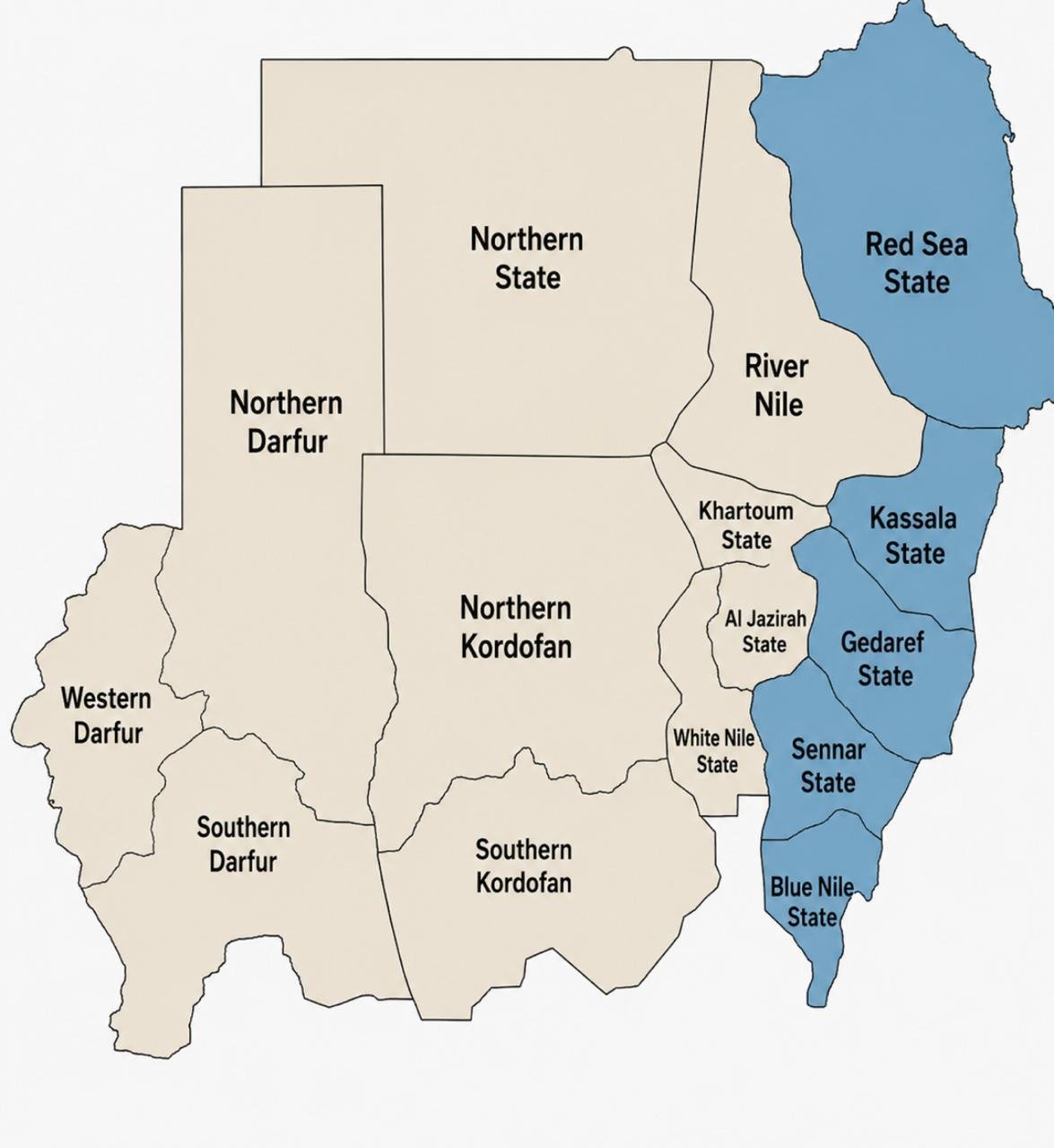
• Boiling East (Red Sea, Kassala, Gedaref): initially a rear corridor, now an increasingly contested arena and seat of the SAF-aligned wartime government.
Food insecurity has escalated rapidly. The 2025 IPC analysis estimates that more than 21 million people are in IPC Phase 3 or worse; famine (IPC Phase 5) has been confirmed in El Fasher (North Darfur) and Kadugli (South Kordofan), with around 20 additional areas at risk if aid access does not improve.
This report outlines four broad scenarios:
- a protracted stalemate and de facto partition, already materializing,
- a dual-government stalemate with partial functional deals,
- escalated fragmentation with regional spillover, and
- negotiated De-escalation and Demographic Recovery, which seems unlikely.
In the near term, variations of stalemate appear more likely than a decisive military victory. To mitigate the worst outcomes, regional and international actors should seek to secure humanitarian access to famine-threatened areas and nationwide ceasefires in, avoid reinforcing war economies, and support a political trajectory that places Sudan’s peripheral populations, women and youth at the center of any future settlement.
Principal Findings
What’s new?
Since April 2023, Sudan’s war between the Sudanese Armed Forces (SAF) and the Rapid Support Forces (RSF) has driven almost 13 million Sudanese from their homes and pushed several areas into famine[1]. By late 2025, Darfur has become both the demographic center and the main territorial base of the RSF[2], while the Nile “core” remains SAF’s institutional backbone. The Eastern region, once a rear logistics corridor, is increasingly militarized and unstable.[3]
National Demography Evolution & Displacement (2008 → 2018 → 2025)[4]’[5]– Who Lives Where?
- 2008 Census (baseline): ~30.8 million[6] people in the 18 northern states that form today’s Sudan.[‡]
- 2018 (pre-war projection): ~46.8 million (OCHA/CBS high-growth scenario)[7].
- 2025 (demographic total): ~51.66 million Sudanese, of whom ~48-49 million remain inside the country.[8]
- By late 2025, almost 13 million Sudanese had been displaced since April 2023, including 4–4.3 million refugees and 9–10 million IDPs.[9]’[10]’[11]
Over less than two decades, Sudan’s population has grown by more than two-thirds despite secession, repeated conflicts and economic contraction.[12]’[13] The key shift is not how many people there are, but where they live: for the first time, mass displacement has unfolded out of Khartoum and the central belt toward the North and the East, as well as Darfur, Kordofan and the Blue Nile.[14]’[15] Combined with rapid, unplanned urbanization and increasingly “distressed” returns, this has concentrated people in conflict-affected peripheries, overstretched “core” hosting areas and fragile urban centres that cannot absorb them.[16]’[17]’[18]
The combination of war, mass displacement, food insecurity, and institutional fragmentation is reshaping Sudan’s demographic and territorial landscape in ways likely to have long-term structural consequences.[19]’[20] Since April 2023, the country has increasingly fragmented into de facto zones of control characterized by chronic displacement and repeated cycles of forced or “distressed” mobility (International Organization for Migration[21]’[22]. Humanitarian and population assessments indicate that conflict-affected peripheral regions, including Darfur, Kordofan, Blue Nile, and the increasingly unstable Eastern states now host the majority of Sudan’s population and bear the greatest burden of violence, hunger, and collapse of public services.[23]’[24] In contrast, the Northern and Central regions continue to concentrate a smaller share of the population but retain much of the remaining administrative capacity and infrastructure inherited from the pre-war state.[25]’[26] Demographically, Sudan remains an overwhelmingly young society, with roughly 60% of the population under age 25 and only a small proportion above 55 years, intensifying pressures related to education disruption, unemployment, and social instability among youth populations affected by conflict.[27]’[28] Analysts warn that without political stabilization and economic recovery, these demographic and spatial inequalities risk entrenching long-term territorial fragmentation, reinforcing war economies and armed patronage systems, and undermining prospects for a civilian-led national political order.[29]’ [30]
Why does it matter?
The combination of war, mass displacement, famine risk, and state fragmentation are reshaping Sudan’s demographic and territorial landscape in ways that are likely to persist well beyond the current conflict. Since the outbreak of fighting in April 2023, Sudan has increasingly evolved toward fragmented zones of control characterized by chronic displacement and repeated cycles of distressed mobility.[31]’[32] The peripheral regions of Darfur, Kordofan, Blue Nile, and the increasingly unstable Eastern region collectively host roughly 30 million people, about 60% of Sudan’s population, yet they bear the greatest burden of violence, food insecurity, and collapse of public services.[33]’[34] By contrast, the historically privileged Nile “core” of Northern and Central Sudan contains approximately 12–13 million people, or about one quarter of the population, and continues to concentrate much of the remaining administrative institutions, infrastructure, and humanitarian access corridors.[35]’[36] Sudan also remains an overwhelmingly young society: nearly 60% of the population is under the age of 25, while only about 7% are older than 55, creating intense demographic pressure amid economic collapse and disrupted education systems.[37]’[38] Four millions of young Sudanese, particularly in conflict-affected peripheries, this demographic structure translates into limited or no schooling, few economic opportunities, and growing vulnerability to recruitment into armed networks or survival migration. If left unaddressed, these spatial and demographic imbalances risk entrenching long-term territorial fragmentation, accelerating regional spillover instability, and consolidating war economies and patronage systems at the expense of any sustainable civilian political order. [39]’[40]
What should be done?
Regional and international actors should:
• Prioritize a nationwide ceasefire and negotiated aid access to famine-threatened areas.[41]’[42]
• Treat Sudan’s displaced and peripheral populations as central political stakeholders, not just humanitarian beneficiaries.[43]’[44]
• Condition engagement with all armed actors on measurable steps towards de-militarizing governance, protecting civilians and opening space for inclusive civilian-led institutions.[45]’[46]
• Support credible, independent international investigations into atrocities, and advance a broader transitional justice process that holds all perpetrators accountable, regardless of affiliation, while recognizing the rights of victims to truth, reparations.[47]’[48]
1. Background and Scope
Sudan’s contemporary political and social geography is marked by deep-seated disparities between a historically privileged Nile corridor and marginalized peripheral regions. Over decades, civil wars, authoritarian governance and unequal development have produced a layered pattern of exclusion affecting Darfur, Kordofan, the Nuba Mountains, Blue Nile and the Eastern states.[49]’[50] The 2018–2019 popular uprising briefly opened a pathway toward a civilian led political transition in Sudan following the overthrow of President Omar al-Bashir. However, the October 2021 military coup halted the democratic transition and restored military dominance over the political process (International Crisis Group, 2022; de Waal, 2022). The subsequent outbreak of open warfare between SAF and RSF in April 2023 effectively collapsed remaining transitional institutions and triggered one of the world’s largest displacement crises.[51]’[52] Urban warfare in Khartoum and other major cities, combined with large-scale population movements toward safer regions and neighboring countries, has fundamentally reshaped settlement patterns and demographic distribution across Sudan.[53]’[54]
This report uses the lens of demographic unravelling to describe these transformations: rapid population growth, persistent displacement and the erosion of central state authority, spatially expressed through fragmented zones of control.
It addresses four questions:
(i) How has Sudan’s population changed in size, age structure and spatial distribution between 2008 and 2025?
(ii) How do the territorial strategies of SAF and allies, RSF/Tasis, and SLA-AW intersect with these demographic shifts?
(iii) In what ways are long-standing periphery–core–East cleavages being remade by war, famine and displacement?
(iv) Which medium-term trajectories are plausible, and what are their implications for domestic and international policy?
2. Methodology and Data Sources
This report draws on multiple quantitative and qualitative datasets to reconstruct Sudan’s demographic evolution, displacement dynamics, food security conditions, and territorial reconfiguration[§].
Demography: Baseline population figures derive from Sudan’s 5th Population and Housing Census conducted by the Central Bureau of Statistics (CBS, 2009). These data are complemented by United Nations humanitarian projections and demographic modeling, including OCHA population planning figures, UN DESA World Population Prospects 2024, World Bank demographic estimates, World Population Review datasets, and the UNFPA World Population Dashboard for Sudan (2025), which together underpin national and regional population estimates for 2025 (CBS, 2009; UN DESA, 2024; World Bank, 2023; UNFPA, 2025).
Displacement: Displacement estimates are synthesized from the International Organization for Migration Displacement Tracking Matrix (DTM) weekly mobility updates, UNHCR’s Operational Data Portal, the Sudan Regional Refugee Response Plan, and reporting by the Internal Displacement Monitoring Centre (IDMC). These datasets allow estimation of individuals displaced at least once since April 2023 and reconstruction of macro-regional and state-level IDP distributions (IOM, 2025; UNHCR, 2025; IDMC, 2025).
Food Security and Health: Food security analysis relies primarily on Integrated Food Security Phase Classification (IPC) country analyses and Famine Review Committee findings. These are complemented by World Food Programme (WFP) market monitoring, operational reporting from Médecins Sans Frontières (MSF), and epidemiological and WASH situation updates from WHO and UNICEF documenting disease outbreaks, malnutrition, and collapse of health services (IPC, 2025; WFP, 2025; MSF, 2025; WHO & UNICEF, 2025).
Conflict Intensity and Territorial Control: Assessments of conflict dynamics and territorial control are based on event-level data from ACLED, humanitarian access and security reporting from OCHA, investigations conducted by UN Human Rights mechanisms, and corroborating reporting from international and Sudanese media outlets including Associated Press, Reuters, Financial Times, The Guardian, Radio Dabanga, and Darfur24. Territorial descriptions reflect conditions observed in late 2025 and remain subject to rapid change (ACLED, 2025; OHCHR, 2024).
Analytical Integration: The report integrates demographic, displacement, humanitarian, and conflict datasets to reconstruct population trends from 2008–2025, map crisis geography, and link demographic transformation to evolving patterns of territorial fragmentation and governance restructuring (UNDP, 2023; International Crisis Group, 2024).
3. Peripheries and the Nile “Core” Demographic Trends, 2008–2025
Sudan’s population has expanded markedly despite prolonged crisis. From around 30.9 million people in 2008, the total number of Sudanese (inside and outside the country) is estimated at 51.66 million by late 2025. Approximately 51.65 million reside within Sudan’s 18 states. Between the 2018 projection and December 2025, Sudan’s total resident population across the 18 states increased by approximately 4.87 million people (10.4%), rising from 46.78 million to 51.65 million. Growth, however, was highly uneven across regions. The Northern Region experienced the largest relative increase (+43.0%), followed by Darfur (+23.3%), the Eastern Region (+19.2%), and Blue Nile–Sinnar (+17.3%), indicating substantial population inflows into peripheral and northern areas. The Central Region (Al Gezira and White Nile) also recorded significant growth (+16.6%). In contrast, the Kordofan/Nuba Mountains region saw only modest growth (+2.9%), while Khartoum experienced a sharp population decline of nearly 30% (−2.39 million people), reflecting large-scale outward displacement and reverse migration. Table 1. Below, highlights a pronounced spatial redistribution of population away from the capital and toward peripheral and northern regions during the 2018–2025 period.
Table 1: Regional Totals (Pre-war vs Dec 2025)
| Region | 2018 Projection | Dec 2025 Resident Pop | Change 2018–2025 | % Change 2018–2025 |
| Darfur Region | 13,0,371 | 30302.27 | +3,047,629 | 23.3% |
| Central Region (Al Gezira, White Nile) | 7,590,800 | 8,850,000 | +1,259,200 | 16.6% |
| Eastern Region | 6,209,509 | 7,400,000 | +1,190,491 | 19.2% |
| Kordofan/Nuba Mountains Region | 6,460,189 | 6,650,000 | +189,811 | 2.9% |
| Khartoum Region | 7,993,235 | 5,600,000 | −2,393,235 | −29.9% |
| Blue Nile–Sinnar Region | 3,026,315 | 3,550,000 | +3,685 | 17.3% |
| Northern Region (Northern, River Nile) | 2,447,697 | 3,500,000 | +1,0,303 | 43.0% |
| TOTAL (18 states) | 46,780,116 | 51,650,000 | +4,869,884 | 10.4% |
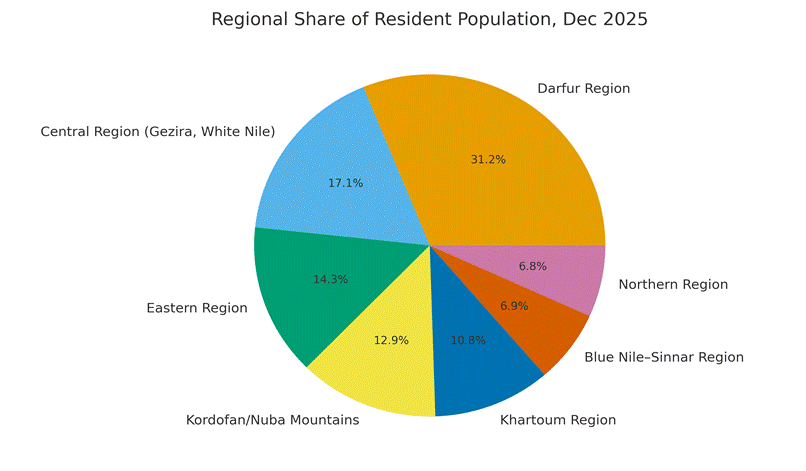
Additionally, figure 1. below, illustrates the regional share of Sudan’s resident population in December 2025, highlighting a clear demographic shift toward the peripheries. Darfur accounts for the largest proportion of the population (31.2%), confirming its emergence as the country’s primary demographic center. The Central Region (Gezira and White Nile) represents 17.1% of residents, followed by the Eastern Region at 14.3% and the Kordofan/Nuba Mountains region at 12.9%. Despite historically serving as Sudan’s political and economic hub, Khartoum now comprises only 10.8% of the population, reflecting substantial wartime displacement. Smaller population shares are observed in the Blue Nile–Sinnar region (6.9%) and the Northern Region (6.8%). Overall, the figure demonstrates a pronounced redistribution of population away from the capital toward conflict-affected peripheral regions.
Figure 1: Regional Share of Resident Population, Dec 2025
Sudan’s age structure is extremely young. Using a mid-range estimate of 51,66 million Sudanese in 2025 and 48-49 million residents inside Sudan, the approximate age distribution is summarized in Table 2. The table shows that Sudan’s population in 2025 is overwhelmingly young, reflecting a pronounced youth demographic structure. Children aged 0–14 constitute the largest group, accounting for approximately 41% of the population (about 21.4 million Sudanese globally and 20.1 million residing inside Sudan). Young adults aged 15–24 represent roughly 20% (about 10.5 million total), while the working-age population aged 25–54 comprises about 31% (approximately 16.2 million). In contrast, older age groups remain relatively small, with individuals aged 55–64 representing about 4% of the population and those aged 65 and older only 3.3%. Overall, the distribution highlights Sudan as a markedly youthful society, with nearly two-thirds of the population under age 25, implying significant long-term pressures on education, employment, and social stability amid ongoing conflict and displacement.
Table 2: Approximate Age Distribution of Sudanese Population (Dec 2025)
| Age Group | Share of Total Population | Total Sudanese (51.66M) | Residents Inside Sudan (~49.1M) |
| 0–14 | ≈ 41% | ≈ 21.4M | ≈ 20.1M |
| 15–24 | ≈ 20% | ≈ 10.5M | ≈ 9.8M |
| 25–54 | ≈ 31% | ≈ 16.2M | ≈ 15.2M |
| 55–64 | ≈ 4% | ≈ 2.1M | ≈ 2.0M |
| 65+ | ≈ 3.3% | ≈ 1.7M | ≈ 1.6M |
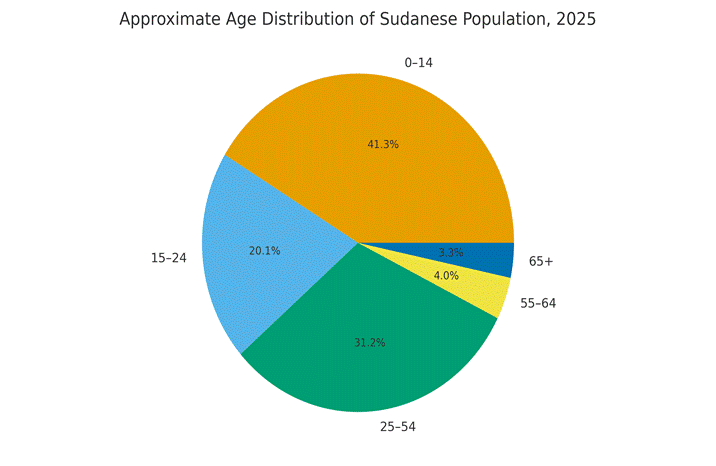
Furthermore, figure 2 below, illustrates the approximate age distribution of Sudan’s population in 2025, highlighting a strongly youthful demographic profile. Children aged 0–14 constitute the largest share of the population at about 41.3%, followed by the working-age group aged 25–54, which accounts for approximately 31.2%. Youth and young adults aged 15–24 represent around 20.1%, meaning that nearly two-thirds of Sudan’s population is under the age of 25. In contrast, older age groups remain relatively small, with individuals aged 55–64 comprising about 4.0% and those aged 65 and older only 3.3%. Overall, the figure underscores Sudan’s pronounced youth bulge, indicating substantial future pressures on education systems, labor markets, and social stability, particularly under ongoing conflict and economic disruption.
Figure 2: Approximate Age Distribution of Sudanese Population, 2025
4. Spatial Reconfiguration: Peripheries, Nile Core and East
The war has sharpened an existing structural divide between Sudan’s peripheries and the Eastern corridor versus the Nile core. Population movements and patterns of control are reshaping each of these zones. Verified IDP counts for November–December 2025, totaling 11,5,160 people, illustrate the distribution of displacement across macro-regions (Table 3). The table shows the distribution of verified internally displaced persons (IDPs) across Sudan’s macro-regions in November–December 2025, totaling 11,5,160 individuals. Darfur accounts for the largest share by far, hosting approximately 5.75 million IDPs, nearly half of the national total confirming its status as the epicenter of displacement. The Central Region (Al Gezira and White Nile) hosts about 1.57 million displaced persons, while Khartoum and the Kordofan/Nuba Mountains regions each shelter just over one million IDPs. The Northern Region accommodates approximately 964,000 displaced individuals, followed by the Eastern Region with about 788,000 and Blue Nile region with roughly 433,000. Overall, the figures highlight both the concentration of displacement in Darfur and the broad geographic spread of the crisis across nearly all regions of the country.
Table 3: IDPs by Macro-Region (Nov/Dec 2025)
| Region | Verified IDPs (Nov/Dec 2025) |
| Darfur Region | 5,748,288 |
| Central Region (Al Gezira, White Nile) | 1,568,000 |
| Eastern Region | 788,073 |
| Kordofan/Nuba Mountains Region | 1,010,668 |
| Khartoum Region | 1,040,000 |
| Blue Nile–Sinnar Region | 432,973 |
| Northern Region | 964,158 |
| Total | 11,5,160 |
Figure 3:Verified IDPs by macro-region, Nov/Dec 2025
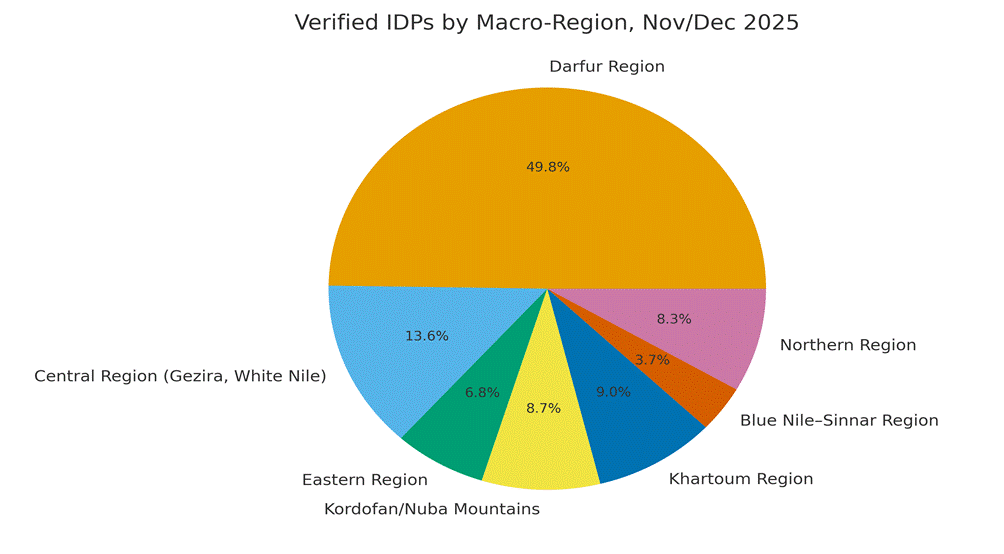
Figure 3. above, showed that internal displacement in Sudan as of November–December 2025 is overwhelmingly concentrated in the Darfur Region, which alone hosts nearly half of all verified internally displaced persons (49.8%), confirming its position as the epicenter of the humanitarian crisis. The Central Region (Gezira and White Nile) accounts for the second-largest share (13.6%), reflecting major displacement following the expansion of conflict into agricultural and population centers. The Khartoum Region represents 9.0% of IDPs, highlighting continued urban displacement after intense fighting in the capital. Displacement is more evenly distributed across peripheral regions, including Kordofan/Nuba Mountains (8.7%), Northern Region (8.3%), and the Eastern Region (6.8%), while the Blue Nile–Sinnar Region hosts a smaller but still significant share (3.7%). Overall, the figure illustrates a highly uneven geographic pattern in which western Sudan—particularly Darfur—bears the largest burden, while displacement has effectively become nationwide, spreading across both conflict frontlines and secondary refuge areas.
Table 4. shows a dramatic reshaping of Sudan’s demographic landscape between 2018 and late 2025, driven by war, displacement, and uneven regional stability. While the national population increased from about 46.8 million in 2018 to an estimated 51.7 million in 2025, growth has been highly uneven across states. Darfur states—especially North Darfur (+54%), East Darfur (+56%), and Central Darfur (+32%)—experienced some of the largest proportional increases, largely due to mass internal displacement, with South Darfur alone hosting roughly 1.84 million IDPs (about 19% of the national total). In contrast, Khartoum shows a sharp population decline (−29.9%), reflecting large-scale outmigration and reverse movement as returnees left high-cost “safe” states. West Darfur stands out for severe depopulation (−35.2%), linked to mass cross-border flight into Chad. Transitional and transit states such as River Nile (+42%), Northern (+44%), and White Nile (+38%) recorded strong growth due to inflows of IDPs, refugees, and returnees, though some are now seeing outward movement. Overall, the data illustrate a profound westward and peripheral population shift, with more than 11.5 million verified IDPs distributed unevenly across states, confirming that displacement is both the primary driver of demographic change and a central feature of Sudan’s emerging territorial fragmentation.
Table 4: Combined State-level Population, Displacement and Change
| State | Census 2008 | Projection 2018 | Dec Resident Pop 2025 | Verified IDPs (Nov/Dec 2025) | Recent Trend | Primary Displacement Context | Change 2018–2025 | Change% 2018–2025 |
| Khartoum | 5,274,321 | 7,993,235 | 5,600,000 | 1,040,000 | Major influx and reverse migration | 40% of returnees moved back due to high costs in “safe” states | −2,393,235 | −29.9% |
| South Darfur | 4,093,594 | 5,353,025 | 6,350,000 | 1,844,000 | Increasing | Largest IDP host (~19% of total); rural displacement amid conflict | +996,975 | 18.6% |
| Al Gezira | 3,575,280 | 5,096,920 | 5,400,000 | 968,000 | Flux | High returns (~37% of returnees) despite conflict | +303,080 | 5.9% |
| North Darfur | 2,113,626 | 2,304,950 | 3,550,000 | 1,756,000 | High increase | Concentrates population | +1,245,050 | 54.0% |
| White Nile | 1,730,588 | 2,493,880 | 3,450,000 | 600,000 | Decreasing | Hosts ~400k South Sudanese refugees plus IDPs | +956,120 | 38.3% |
| River Nile | 1,120,441 | 1,511,442 | 2,150,000 | 458,000 | Decreasing | Transit hub; outflow back to Khartoum | +638,558 | 42.2% |
| Central Darfur | – | 2,499,000 | 3,300,000 | 978,357 | Stable | Jebel Marra shelter zone | +801,000 | 32.1% |
| Kassala | 1,789,806 | 2,519,071 | 3,050,000 | 350,000 | Stable | Hosts refugees from Ethiopia/Eritrea and IDPs | +530,929 | 21.1% |
| Al Qadarif | 1,348,378 | 2,208,385 | 2,700,000 | 335,000 | Decreasing | Seasonal labour migration plus returns | +491,615 | 22.3% |
| South Kordofan | 1,406,404 | 2,107,623 | 2,250,000 | 388,075 | Mixed | Nuba Mountains host significant IDPs | +142,377 | 6.8% |
| Sinnar | 1,285,058 | 1,918,692 | 2,150,000 | 70,900 | Flux | Transit zone for returnees heading to Gezira | +231,308 | 12.1% |
| East Darfur | – | 1,119,451 | 1,750,000 | 807,744 | Stable | Buffer state absorbing outflow from South Darfur | +630,549 | 56.3% |
| Red Sea | 1,396,110 | 1,482,053 | 1,650,000 | 103,073 | Drop in IDPs | High costs pushing IDPs out of Port Sudan | +167,947 | 11.3% |
| Northern | 699,065 | 936,255 | 1,350,000 | 506,158 | Transit | Artery for migration to Egypt | +413,745 | 44.2% |
| Blue Nile | 832,112 | 1,107,623 | 1,400,000 | 362,073 | Stable | Limited conflict allowed retention | +292,377 | 26.4% |
| West Darfur | 1,308,225 | 1,775,945 | 1,150,000 | 362,187 | Exodus | Mass flight to Chad; major depopulation | −625,945 | −35.2% |
| West Kordofan | – | 1,178,537 | 1,250,000 | 400,113 | Conflict | Oil-field battles; Drone strikes, limited access | +71,463 | 6.1% |
| North Kordofan | 2,920,992 | 3,174,029 | 3,150,000 | 222,480 | Transit | Contested hub at El Obeid | −24,029 | −0.8% |
| TOTAL (18 states) | 30,894,000 | 46,780,116 | 51,650,000 | 11,5,160 |
Figure 4: State share of resident population, Dec 2025
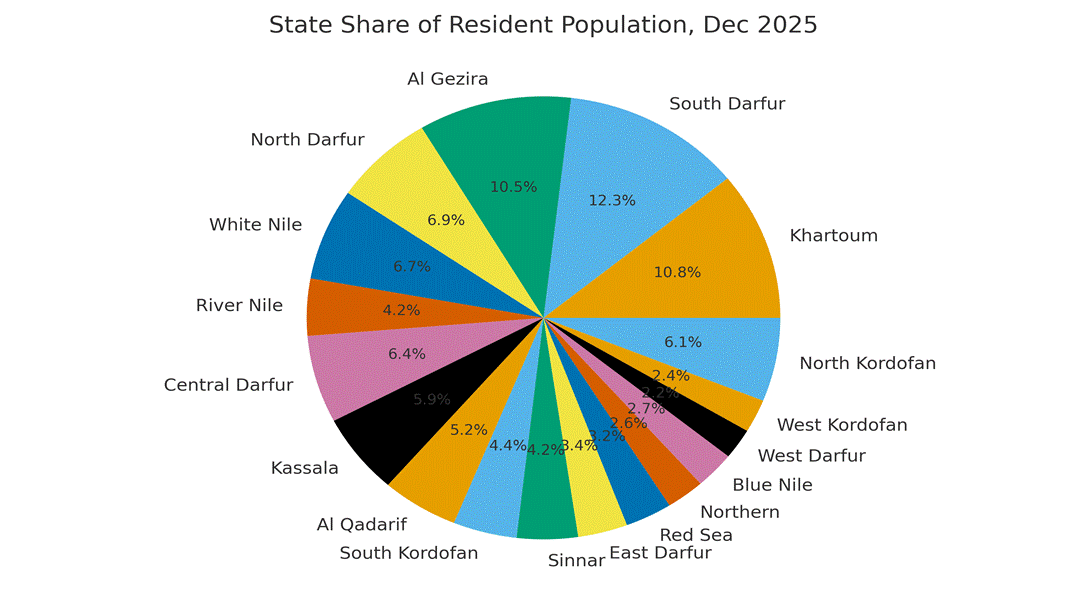
Figure 4 illustrates the distribution of Sudan’s resident population by state as of December 2025, showing a highly concentrated but regionally diversified demographic structure. South Darfur (12.3%) holds the largest share of the national population, followed by Khartoum (10.8%) and Al Gezira (10.5%), indicating a shift in demographic weight toward conflict-affected western and central agricultural regions. North Darfur (6.9%) and White Nile (6.7%) also represent significant population centers, reflecting both displacement inflows and refugee hosting dynamics. Mid-sized shares are observed in Central Darfur (6.4%), North Kordofan (6.1%), and Kassala (5.9%), while states such as River Nile (4.2%), Sinnar (4.2%), and South Kordofan (4.4%) maintain moderate proportions. Smaller population shares are seen in West Darfur, West Kordofan, Blue Nile, Red Sea, Northern, and East Darfur, each generally below 5%. Overall, the figure highlights a redistribution of population away from the historic Khartoum core toward Darfur and other peripheral regions, underscoring how conflict and displacement have rebalanced Sudan’s demographic geography by late 2025.
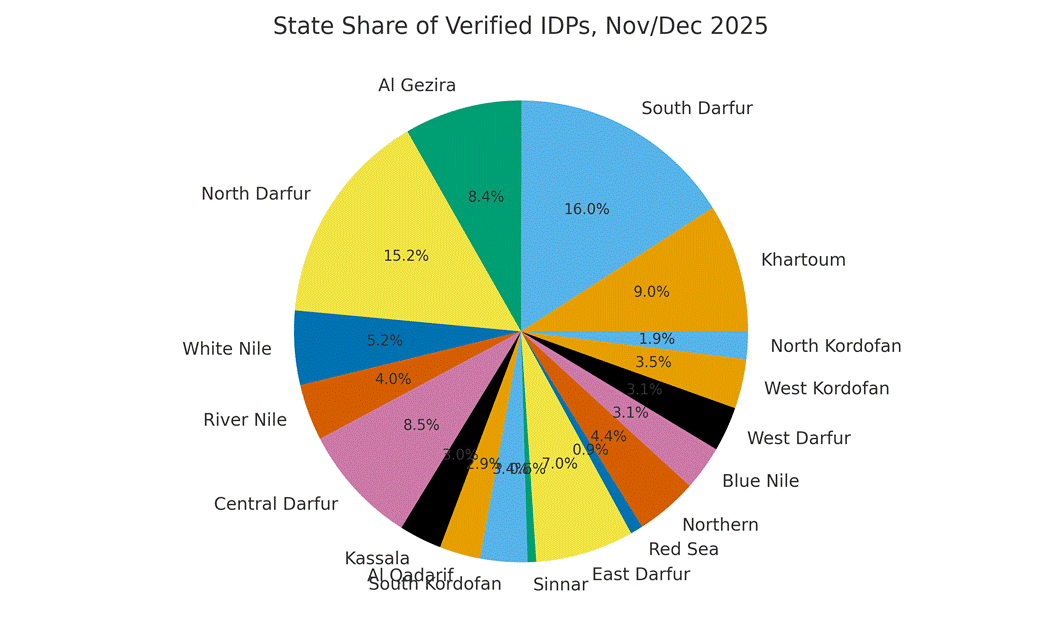
On the other hand, Figure 5. Below, presents the distribution of verified internally displaced persons (IDPs) across Sudanese states in November–December 2025, highlighting the strong geographic concentration of displacement in Darfur. South Darfur (16.0%) hosts the largest share of IDPs nationwide, closely followed by North Darfur (15.2%), confirming Darfur as the primary center of humanitarian displacement. Khartoum (9.0%), Central Darfur (8.5%), and Al Gezira (8.4%) also account for significant proportions, reflecting both conflict-driven urban displacement and secondary migration toward agricultural and relatively accessible regions. Moderate IDP shares are observed in White Nile (5.2%), River Nile (4.0%), Northern (4.4%), and East Darfur (7.0%), many functioning as transit or refuge zones. Smaller but notable concentrations appear in West Kordofan, West Darfur, Blue Nile, Kassala, and South Kordofan, while North Kordofan and Red Sea host comparatively limited proportions. Overall, the figure demonstrates that while displacement now affects nearly all states, it remains heavily centered in western Sudan, with Darfur continuing to absorb the largest burden of conflict-induced population movement.
Figure 5: State share of verified IDPs, Nov/Dec 2025
5. Food Insecurity, Famine and Health
The war has collided with structural vulnerabilities in Sudan’s food systems. Market disruptions, sieges, asset stripping, displacement and the collapse of public services have driven a sharp deterioration in food security and health outcomes. The 2025 IPC analysis estimates that more than 21 million people, roughly two-fifths of Sudan’s population – are in IPC Phase 3 (Crisis) or worse. Two area-level famines (IPC Phase 5) have been formally confirmed in El Fasher (North Darfur), and Kadugli (South Kordofan), where siege conditions and market collapse have severely constrained access. Around 20 additional areas are at risk of famine if access deteriorates further.
Table 5. below, highlights a deeply fragmented humanitarian landscape across Sudan, where food insecurity, conflict intensity, and health system collapse closely overlap. Famine (IPC Phase 5) is confirmed in North Darfur (El Fasher) and South Kordofan (Kadugli), both characterized by intense conflict, drone strikes, besiegement, collapsed health services, and extreme malnutrition levels (GAM exceeding emergency thresholds). A broad belt of Emergency (Phase 4) conditions stretches across much of Darfur, Khartoum, Gezira, and parts of Kordofan, where high or volatile conflict, ethnic violence, infrastructure destruction, and restricted humanitarian access drive severe malnutrition, cholera outbreaks, and degraded medical services. Darfur states in particular combine high malnutrition caseloads, tribal tensions, and large-scale displacement, while Khartoum faces heavy militarization and high preventable mortality. States classified as Crisis (Phase 3)—including North Kordofan, Sinnar, White Nile, and Blue Nile—experience ongoing insecurity, disease outbreaks (notably cholera and dengue), and displacement pressures but retain partial functionality. In contrast, relatively safer rear or transit areas such as River Nile, Northern, Red Sea, Kassala, and Al Qadarif (Stressed – Phase 2) remain more secure yet are strained by IDP and refugee inflows, rising food prices, and overburdened health systems. Overall, the table underscores a country divided between famine-affected frontlines, emergency humanitarian zones, and fragile but increasingly pressured transit and supply corridors.
Table 5: State-level Crisis Indicators (Nov 2025)
| State | IPC Food Security Status | Conflict Intensity | Health & Disease Status | Critical Notes |
| North Darfur | FAMINE (Phase 5) in El Fasher | High/variable; ongoing both sides drone strikes, tensions, clashes | Health system collapsed; GAM >30% in Melit & Tawisha | Largest caseload of malnutrition in Darfur; El Fasher city partly emptied; lack of security, tribal tensions |
| South Kordofan | FAMINE (Phase 5) in Kadugli | High; besieged town, inaccessible rural areas; both sides drone strikes | Severe cholera and malnutrition | Famine confirmed by IPC FRC, lack of security |
| Khartoum | Emergency (Phase 4) | Medium/variable; directive violence heavy militarization, RSF drone strikes | War remnants, high risk of dengue and cholera | Highest estimated death toll from preventable causes |
| Al Gezira | Emergency (Phase 4) | Stable; Ethnic cleansing, directive violence, heavy militarization | Health facilities degraded | Major flashpoint after Khartoum |
| South Darfur | Emergency (Phase 4) | High; Nyala RSF-controlled but volatile, SAF drone strikes | GAM ≈28% in Tulus | Large caseload of malnutrition in Darfur; lack of security, tribal tensions |
| West Darfur | Emergency (Phase 4) | Medium; mass flight to Chad; major depopulation, SAF drone strikes b | Hospital infrastructure destroyed | Mass exodus to Chad, lack of security, tribal tensions |
| Central Darfur | Emergency (Phase 4) | Medium; , SAF drone strikes Jebel Marra SLA AW stronghold is relatively safe | Limited access; traditional medicine reliance | Safer than North Darfur, but poorly served, lack of security, tribal tensions |
| East Darfur | Emergency (Phase 4) | Medium; tense transit zone, SAF drone strikes | GAM ≈28% in Yassin | Malnutrition driven by large IDP influx, tribal tensions |
| West Kordofan | Emergency (Phase 4) | High; possible conflict around oil fields, drone strikes by both sides | Severe cholera reported | Very limited humanitarian access; lack of security |
| North Kordofan | Crisis (Phase 3) | High; El Obeid under siege, skirmishes; drone strikes by both sides | High dengue incidence | Attacks on commercial convoys frequent; lack of security |
| Sinnar | Crisis (Phase 3) | Stable; SAF frontline | Moderate cholera caseload | High displacement flux |
| White Nile | Crisis (Phase 3) | Medium; tensions in camps | Severe cholera/malaria in overcrowded camps | Highest refugee density |
| Blue Nile | Crisis (Phase 3) | High–moderate; sporadic skirmishes | Relatively stable health access | One of few relatively functioning areas |
| River Nile | Stressed (Phase 2) | Low; SAF rear area | Health system strained by IDP density | Food available but increasingly unaffordable |
| Northern | Stressed (Phase 2) | Low; relatively secure | Health services overwhelmed by migrants | Key artery for imports from Egypt |
| Red Sea | Stressed (Phase 2) | Low; de facto capital | Cholera largely contained; dengue risk high | Critical hub for aid and governance |
| Kassala | Stressed (Phase 2) | Low; some militia tensions | Ongoing cholera response | Hosting large refugee population |
| Al Qadarif | Stressed (Phase 2) | Low; agricultural heartland | Moderate health risks | Essential to national food production |
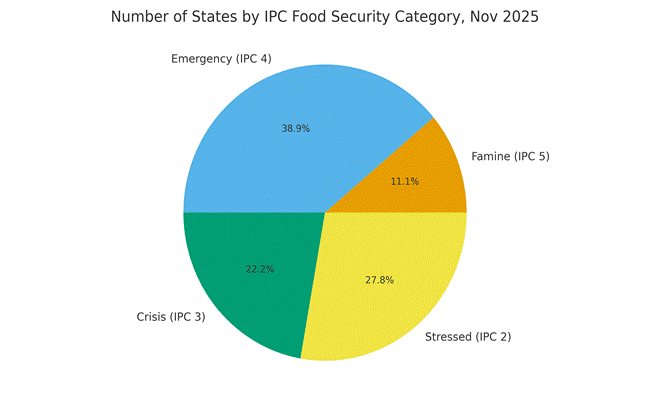
Figure 6 shows the distribution of Sudanese states by IPC food security classification as of November 2025, highlighting the scale and severity of the crisis nationwide. The largest share of states (38.9%) are classified under Emergency (IPC Phase 4), indicating widespread food consumption gaps, acute malnutrition, and heightened mortality risk. An additional 22.2% of states fall under Crisis (IPC Phase 3), where households face significant food deficits and are forced to adopt harmful coping strategies. Alarmingly, 11.1% of states are experiencing Famine (IPC Phase 5) conditions in specific localities, representing the most extreme level of food insecurity. Only 27.8% of states are categorized as Stressed (IPC Phase 2), meaning they remain under economic pressure but have not yet reached crisis thresholds. Overall, the figure demonstrates that nearly three-quarters of Sudan’s states are in IPC Phase 3 or worse, underscoring the nationwide depth of food insecurity and the structural collapse of livelihoods amid ongoing conflict and displacement.
Figure 6: Number of states by IPC food security category, Nov 2025
As of the latest IPC “Special Snapshot” (September 2025), about 21.2 million people in Sudan – roughly 45% of the population – are in IPC Phase 3 or worse (Crisis, Emergency or Famine).
6. Scenarios and Strategic Outlook
Looking ahead, three broad trajectories can be envisaged. These are not predictions but possible pathways, given current dynamics.
1. Protracted stalemate and de facto partition, which is already materializing. Front lines harden, and SAF, RSF/Tasis and SPLM-N (al-Hilu) consolidate their respective territories. Governance becomes fragmented, with separate security, revenue and patronage systems. Displacement remains chronic, and large parts of Darfur and Kordofan are governed outside any unified national framework.
2. Dual-government stalemate with partial functional deals. SAF-linked authorities in Port Sudan and RSF/Tasis-linked structures in Darfur and Kordofan operate as rival centres of power, each claiming national legitimacy but effectively ruling distinct territories. Under pressure from regional and international actors, limited agreements are reached on specific issues (for example, oil transit, border management, humanitarian corridors), but without a comprehensive political settlement.
3. Escalated fragmentation and regional spillover. Escalated fighting around key hubs such as El Obeid, Kadugli, Diling, Blue Nile, White Nile, and Khartoum, or along eastern corridors, draws in neighbouring states more directly, whether through proxy support, cross-border operations or competing security agendas. This scenario would likely deepen humanitarian suffering and complicate prospects for any negotiated settlement.
4. egotiated De-escalation and Demographic Recovery
A fourth scenario involves gradual de-escalation through a peace process supported by the Quad (United States, Saudi Arabia, United Arab Emirates, and the United Kingdom). Even in this case, demographic recovery would likely be slow and uneven, with selective returns as many displaced households lack security, livelihoods, and basic infrastructure.
Rather than a rapid reversal of displacement, Sudan would likely experience prolonged demographic reconfiguration marked by partial returns and continued urban settlement of displaced populations. Recovery would depend on restoring basic services, resolving land and housing disputes, and investing in education, healthcare, and employment to stabilize Sudan’s large youth population.
In the short to medium term, variants of the first two scenarios appear more plausible than a decisive military victory by any party. Elements of the third scenario may nonetheless emerge locally, particularly where cross-border dynamics and strategic infrastructure are at stake.
7. Conclusion and Policy Implications
Conclusion and Policy Implications: Demographic Implications of the Four Scenarios and Pathways for Strategic Intervention
Sudan’s demographic unravelling is not only a humanitarian catastrophe; it is also reshaping the foundations of the state. The interplay between rapid population growth, militarized governance, and spatially uneven development has produced overlapping crises of displacement, famine, and political fragmentation. Across the scenarios examined in this report, demographic dynamics—particularly mass displacement, the redistribution of population away from Khartoum toward peripheral regions, and Sudan’s pronounced youth bulge—are central to shaping both the trajectory of the conflict and the prospects for recovery.
In a protracted stalemate and de facto partition, chronic displacement would become entrenched as a structural condition. Darfur would remain the principal demographic center and the main locus of repeated displacement, while Kordofan, Blue Nile, and parts of the North and East would continue to absorb displaced populations despite limited services and economic capacity. Such a scenario would normalize cyclical mobility and distressed urbanization, requiring policy responses that move beyond emergency relief toward long-term management of displacement and sustained support for host communities and urban infrastructure.
A dual-government stalemate with partial functional arrangements would likely produce a more structured but fragmented demographic order. Populations would increasingly orient their livelihoods and social services toward rival governance systems, potentially stabilizing some movement while deepening territorial segmentation. Over time, differential access to education, healthcare, and civil administration could become institutionalized across divided authorities. Strategic intervention should therefore prioritize maintaining nationally interoperable civilian systems to prevent administrative fragmentation from translating into long-term demographic separation.
Under escalated fragmentation and regional spillover, Sudan would face a more acute demographic shock. Intensified conflict around strategic corridors could generate additional waves of internal displacement and refugee flows, while famine and health system collapse increase mortality. In such circumstances, the crisis would shift from population redistribution toward demographic attrition. Policy priorities would therefore center on emergency containment, including securing humanitarian access, preventing famine, and strengthening regional coordination to manage displacement and aid flows.
A negotiated de-escalation and demographic recovery scenario, potentially supported by international mediation such as Quad-led diplomatic efforts, would likely produce gradual and uneven demographic stabilization. Returns would remain selective, as insecurity, destroyed livelihoods, and unresolved land claims limit large-scale resettlement. Sudan would instead experience a period of demographic reconfiguration characterized by partial returns, circular migration, and continued urban settlement of displaced populations. Recovery would depend on restoring basic services, resolving property disputes, and investing in education, healthcare, and employment opportunities, particularly for Sudan’s large youth population.
Taken together, these scenarios highlight several policy implications. Displacement in Sudan should be treated as a chronic, multi-phased process, requiring flexible planning that accounts for repeated mobility rather than linear return trajectories. Peripheral populations—particularly those in Darfur, Kordofan, Blue Nile, and the Eastern states, as well as women and youth—must be re-centered in political processes, given their disproportionate exposure to conflict and displacement. International engagement should avoid reinforcing war economies by conditioning assistance on transparency, civilian oversight, and equitable distribution. Finally, sustained investment in demographic data systems, early warning mechanisms, and accountability frameworks will be essential for anticipating humanitarian risks and supporting long-term stabilization.
Several implications follow:
- Recognize and plan for chronic, multi-phased mobility. Displacement in Sudan is rarely linear. People move multiple times and may oscillate between “IDP” and “returnee” status; planning frameworks should reflect this reality.
- Re-centre peripheral populations in political processes. Darfuris, Kordofanis, Nuba, Blue Nile communities, Easterners, women, and youth must be treated as central political stakeholders in any future negotiation framework, not just humanitarian aid recipients.
- Avoid reinforcing war economies. External support risks entrenching armed networks that profit from conflict; assistance should therefore be conditioned on transparency, civilian oversight, and equitable distribution.
- Invest in data, early warning, and accountability. Demographic, displacement, food security, and health monitoring are essential for anticipating famine, allocating resources, and supporting accountability for violations.
- Condition international engagement on civilian protection and political opening. Regional and international actors should calibrate their engagement with all armed groups to encourage de-escalation, civilian protection, and the incremental opening of political space.
Absent such measures, Sudan risks prolonged fragmentation into rival territorial authorities sustained by war economies and chronic displacement—an outcome that would impose severe costs on Sudanese civilians and destabilize the wider region. Early, sustained, and principled engagement is therefore required to prevent this trajectory and to support a pathway toward a more inclusive, civilian-led political settlement.
Acronyms
ACLED – Armed Conflict Location & Event Data Project
AP – Associated Press
CBS – Central Bureau of Statistics (Sudan)
CFA – Chartered Financial Analyst
CPA – Certified Public Accountant
DTM – Displacement Tracking Matrix
FAO – Food and Agriculture Organization of the United Nations
FRC – Famine Review Committee (of the IPC)
FT – Financial Times
GAM – Global Acute Malnutrition
IDMC – Internal Displacement Monitoring Centre
IDP – Internally Displaced Person
IDPs – Internally Displaced Persons
IFPRI – International Food Policy Research Institute
IOM – International Organization for Migration
IPC – Integrated Food Security Phase Classification
MRG – Minority Rights Group International
MSF – Médecins Sans Frontières (Doctors Without Borders)
OCHA – United Nations Office for the Coordination of Humanitarian Affairs
OpData – Operational Data (UNHCR Operational Data Portal)
RSF – Rapid Support Forces
SAF – Sudanese Armed Forces
SLA-AW – Sudan Liberation Army – Abdel Wahid
SPLM-N – Sudan People’s Liberation Movement–North
Tasis/Tasees – Sudan Founding Alliance (Tasis/Tasees)
UN – United Nations
UN DESA – United Nations Department of Economic and Social Affairs
UNFPA – United Nations Population Fund
UNHCR – United Nations High Commissioner for Refugees
UNICEF – United Nations Children’s Fund
WASH – Water, Sanitation and Hygiene
WFP – World Food Programme
WHO – World Health Organization
References
[*] Dr. Ismail Abdelrahaman, CPA, CFA, is a Chartered Financial Analyst and Certified Public Accountant who currently serves as Principal at Mosaic CPA, Inc., a U.S.-based small CPA and advisory firm. He previously served as a Lecturer at the Faculty of Commerce, Al Neelain University, Khartoum, Sudan (2002–2010). In addition to his academic and professional career, he was engaged in political activism and was the Founder and Chairperson of the United Popular Front (UPF), a Sudanese youth and student political organization, from 2003 to 2006. Abdelrahaman can be reached at ismail.abdelrahaman@gmail.com or via LinkedIn at linkedin.com/in/ismail-abdelrahaman-cpa-ea-cfa-phd-881a6363.
[†] All population estimates presented in this paper are subject to significant uncertainty. Since the outbreak of war in April 2023, large-scale internal displacement, refugee outflows, disrupted enumeration systems, and probable excess mortality have reduced the comparability of available datasets. Census-based projections, humanitarian planning figures, and displacement statistics reflect different methodologies and should not be treated as fully interchangeable. Accordingly, the figures cited here are intended to capture broad demographic patterns and geographic redistribution rather than precise levels of net population growth.
[‡] The 2008 census was conducted under the National Congress Party (NCP) government of Omar al-Bashir and its accuracy has been widely contested, particularly for peripheral areas. Populations in IDP camps and territories controlled by rebel groups in Darfur were likely undercounted, and questions related to identity were politically sensitive and disputed. In addition, many Southerners living in the North at the time were counted as residents there, even though large numbers later returned to South Sudan after secession.
[§] Population Estimates and Data Limitations:Population estimates used in this report combine census-based demographic projections with humanitarian operational datasets. Baseline demographic figures derive from Sudan’s 2008 Population and Housing Census and subsequent projections produced by international demographic databases (including UN DESA, World Bank, and UNFPA). Because no nationwide census has been conducted since 2008 and the conflict that began in April 2023 severely disrupted civil registration and statistical systems, recent population figures necessarily rely on modeled estimates rather than direct enumeration. Humanitarian planning figures from OCHA and displacement data from IOM DTM and UNHCR are incorporated to approximate the geographic distribution of populations and displaced groups during the conflict period. These datasets serve different operational purposes and therefore are not fully comparable: demographic projections estimate resident population size, while humanitarian planning figures often reflect operational estimates of people present in specific locations at a given time.
Consequently, the population totals presented in this report should be interpreted as indicative ranges rather than precise counts. Wartime population dynamics are influenced by large-scale internal displacement, cross-border refugee movements, temporary or “distressed” returns, and likely substantial but incompletely measured excess mortality from violence, disease, and food insecurity. In this context, the estimates used here are intended primarily to illustrate broad spatial redistribution and demographic trends across Sudan’s regions between 2008 and 2025 rather than to establish exact levels of net population growth.
[1] Action against hunger. 2026. Sudan Becomes the World’s Hungriest Country as Famine Spreads to Two New Areas of Darfur
New IPC Analysis Identifies Famine in El Fasher and Kadugli. Press release, November 2025. https://www.actionagainsthunger.org/press-releases/sudan-becomes-the-worlds-hungriest-country-as-famine-spreads-to-two-new-areas-of-darfur/
[2] Jamestown. Andrew McGregor. 2025. RSF Establishes Rival Government as Sudan’s War Spirals. https://jamestown.org/rsf-establishes-rival-government-as-sudans-war-spirals/#:~:text=Executive%20Summary:,a%20negotiated%20national%20political%20settlement.
[3] ACLED. 2025. Fighting Moves to Kordofan as Sudan’s East–West Divide Solidifies.
https://acleddata.com/report/fighting-moves-kordofan-sudans-east-west-divide-solidifies
[4] Central Bureau of Statistics (CBS). 2008. 5th Sudan Population and Housing Census. Khartoum: Government of Sudan.
[5] Central Bureau of Statistics (CBS). 2009. Sudan Census 2008: Population Distribution by State and Geographical Areas. Khartoum: Government of Sudan.
[6] Central Bureau of Statistics (CBS). 2009. Fifth Sudan Population and Housing Census – Priority Results. Khartoum, Sudan.
[7] OCHA. 2019. Sudan Humanitarian Needs Overview 2019. United Nations Office for the Coordination of Humanitarian Affairs.
[8] United Nations Department of Economic and Social Affairs (UN DESA). 2024. World Population Prospects 2024 Revision. New York: United Nations.
[9] International Organization for Migration (IOM). 2025. Sudan Displacement Tracking Matrix (DTM) — Mobility Update. Geneva: IOM.
[10] UNHCR. 2025. Sudan Situation Operational Update. United Nations High Commissioner for Refugees.
[11] OCHA. 2025. Sudan Humanitarian Update. United Nations Office for the Coordination of Humanitarian Affairs.
[12] United Nations Department of Economic and Social Affairs (UN DESA). 2024. World Population Prospects 2024 Revision. New York: United Nations.
[13] World Bank. 2023. Sudan Economic Monitor: Coping with Crisis. Washington, DC: World Bank. https://www.worldbank.org
[14] United Nations Office for the Coordination of Humanitarian Affairs (OCHA). 2025. Sudan Humanitarian Needs Overview 2025. https://www.unocha.org/sudan
[15] international Organization for Migration (IOM). 2025. Sudan Displacement Tracking Matrix (DTM) — Mobility Update. Geneva: IOM. https://dtm.iom.int/sudan
[16] UN-Habitat. 2024. Sudan Urban Profile: Conflict-Induced Urbanization and Housing Stress Assessment. Nairobi: United Nations Human Settlements Programme.
[17] International Crisis Group. 2024. Sudan’s Civil War and the Fragmentation of the State. Brussels: International Crisis Group. https://www.crisisgroup.org
[18] UNHCR. 2025. Sudan Situation Regional Refugee Response Plan. https://data.unhcr.org/en/situations/sudan
[19] United Nations Office for the Coordination of Humanitarian Affairs (OCHA). 2025. Sudan Humanitarian Needs Overview 2025. New York: United Nations.
[20] International Crisis Group. 2024. Sudan’s Civil War and the Fragmentation of the State. Brussels: International Crisis Group.
[21] International Organization for Migration (IOM). 2025. Sudan Displacement Tracking Matrix (DTM) — Mobility Update. Geneva: IOM.
[22] United Nations High Commissioner for Refugees (UNHCR). 2025. Sudan Situation Regional Refugee Response Plan. Geneva: UNHCR.
[23] United Nations Office for the Coordination of Humanitarian Affairs (OCHA). 2025. Sudan Humanitarian Needs Overview 2025. New York: United Nations.
[24] FEWS NET. 2024. Sudan Food Security Outlook and Famine Risk Analysis. Famine Early Warning Systems Network.
[25] International Crisis Group. 2024. Sudan’s Civil War and the Fragmentation of the State. Brussels: International Crisis Group.
[26] World Bank. 2023. Sudan Economic Monitor: Coping with Crisis. Washington, DC: World Bank
[27] United Nations Department of Economic and Social Affairs (UN DESA). 2024. World Population Prospects 2024 Revision. New York: United Nations.
[28] United Nations Children’s Fund (UNICEF). 2024. Sudan Humanitarian Situation Report. New York: UNICEF.
[29] International Crisis Group. 2024. Sudan’s Civil War and the Fragmentation of the State. Brussels: International Crisis Group.
[30] World Bank. 2023. Sudan Economic Monitor: Coping with Crisis. Washington, DC: World Bank
[31] UNHCR. 2025. Sudan Situation – Operational Data Portal (OpData): Regional Overview and Country Dashboards. Geneva: UNHCR. https://data.unhcr.org/en/search?text=Sudan+Situation
[32] IOM. 2025. DTM Sudan: Mobility Tracking Reports – Returnees and Second-Wave Displacement. Geneva: IOM. https://dtm.iom.int/sudan
[33] OCHA. 2025. Sudan: Summary of the Humanitarian Needs and Response Plan and the Regional Refugee Response Plan. New York: OCHA. https://www.unocha.org/sudan
[34] IPC. 2024. Annual Food Security Analysis 2024: Sudan. Rome: IPC Global Support Unit. https://www.ipcinfo.org/ipc-country-analysis/details-map/en/c/1156903/?iso3=SDN
[35] World Bank. 2023.Sudan Country Overview. https://www.worldbank.org/en/country/sudan
[36] ACLED (Armed Conflict Location & Event Data Project). 2025. Sudan Conflict Analysis: Territorial Fragmentation and Armed Actor Control.
[37] UN DESA (United Nations Department of Economic and Social Affairs). 2024. World Population Prospects 2024: Sudan Country Profile.
[38] World Bank. 2022. Sudan Economic Monitor: The Demographic Challenge. https://data.unhcr.org
[39] International Crisis Group. 2024. Sudan’s War: Preventing Regional Spillover. Brussels: International Crisis Group.
[40] de Waal, Alex. 2023. Sudan’s Unfinished Revolution and the Political Marketplace. World Peace Foundation, Tufts University.
[41] United Nations Security Council (UNSC). 2024. Resolution 2736 (2024): Protection of Civilians and Humanitarian Access in Sudan.
[42] UN Office for the Coordination of Humanitarian Affairs (OCHA). 2025. Sudan Humanitarian Needs Overview 2025.
[43] International Crisis Group. 2024. Keeping Sudan’s War from Spreading. Brussels: International Crisis Group. https://www.crisisgroup.org
[44] De Waal, Alex. 2019. Sudan’s Political Marketplace and the Limits of Elite Bargaining. World Peace Foundation, Tufts University.
[45] African Union (AU). 2023. African Union Roadmap for the Resolution of the Conflict in Sudan. Addis Ababa: African Union Peace and Security Council
[46] United States Institute of Peace (USIP). 2024. Toward a Civilian-Led Political Process in Sudan. Washington, DC. https://www.usip.org
[47] United Nations Security Council (UNSC). 2024. Resolution 2736 (2024): Protection of Civilians and Humanitarian Access in Sudan.
[48] OHCHR (Office of the United Nations High Commissioner for Human Rights). 2025. Accountability and Human Rights Violations in Sudan.
[49] de Waal, Alex. 2015. The Real Politics of the Horn of Africa: Money, War and the Business of Power. Cambridge: Polity Press.
[50] Johnson, Douglas H. 2016. Sudan’s Civil Wars. Updated Edition. Oxford: James Currey.
[51] International Crisis Group. 2022. Sudan’s Coup: Why the Military Pushed Back. Brussels: International Crisis Group. https://www.crisisgroup.org
[52] OCHA (UN Office for the Coordination of Humanitaria Affairs). 2024. Sudan Humanitarian Needs Overview. https://www.unocha.org/sudan
[53] IOM (International Organization for Migration). 2025. Sudan Displacement Tracking Matrix (DTM). Mobility Overview. https://dtm.iom.int/sudan
[54] ACLED (Armed Conflict Location & Event Data Project). 2024. Sudan Conflict Watch: Escalation of Urban Warfare and Territorial Fragmentation.