
Report: SPT
At the heart of the civil war that has torn Sudan apart since 2023, a less visible trajectory is emerging beyond the military frontlines: the gradual return of political Islam networks (the Muslim Brotherhood) within state institutions, alongside a growing Iranian military involvement.
An analysis published by Horn Review suggests that this development is not merely a temporary convergence imposed by war, but the result of an institutional structure that accumulated over decades within Sudanese state apparatuses particularly during the Islamist rule between 1989 and 2019.
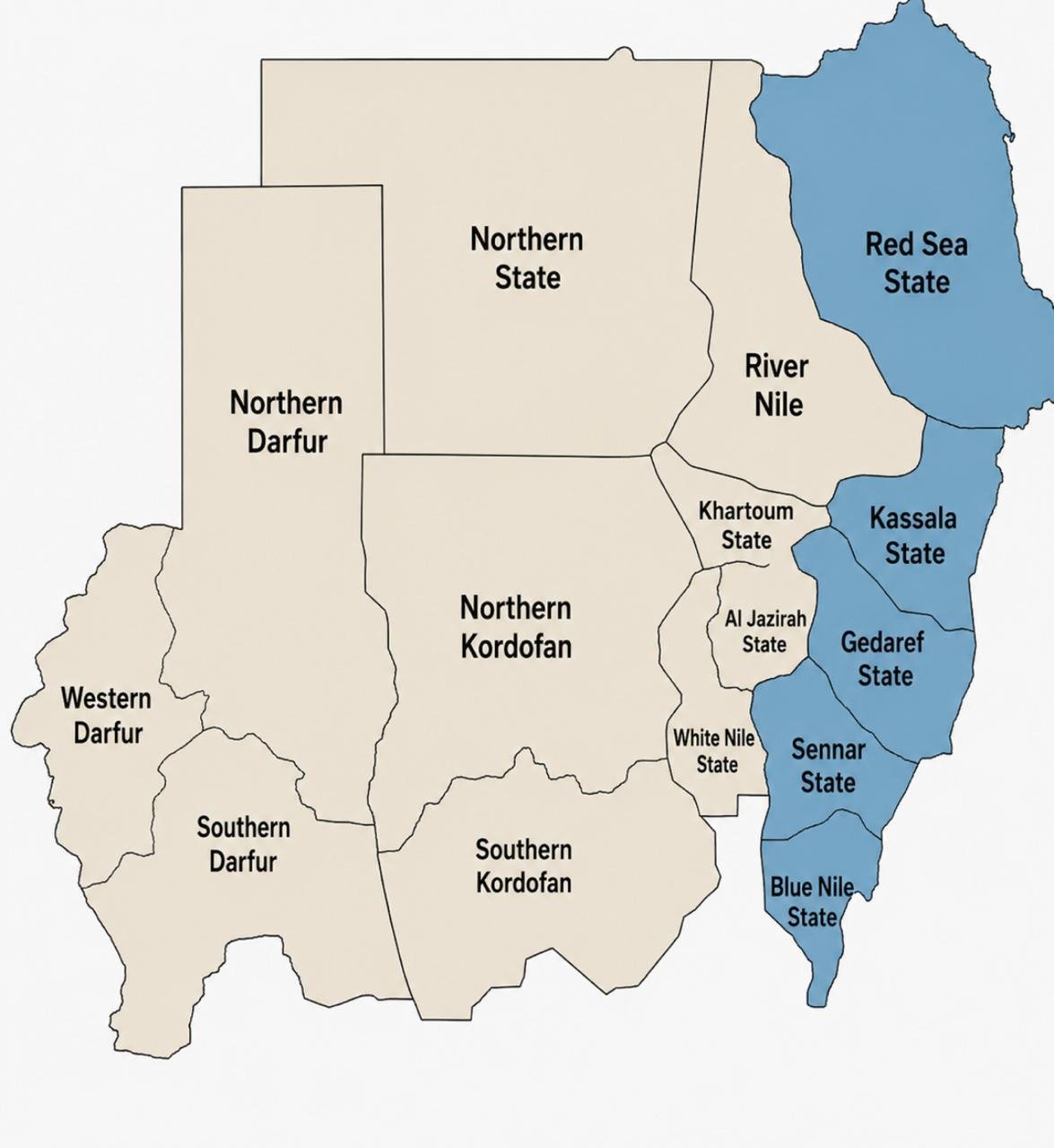
This intersection between internal institutional structures and external support is reshaping the map of the war in Sudan and raising broader questions about the future and strategic security of the Red Sea.
An Un-dismantled Legacy
When the Islamist-led regime in Sudan fell in 2019, it was widely seen as the end of a political era that had lasted three decades. Yet the collapse of political authority did not necessarily mean the dismantling of the networks that sustained it.
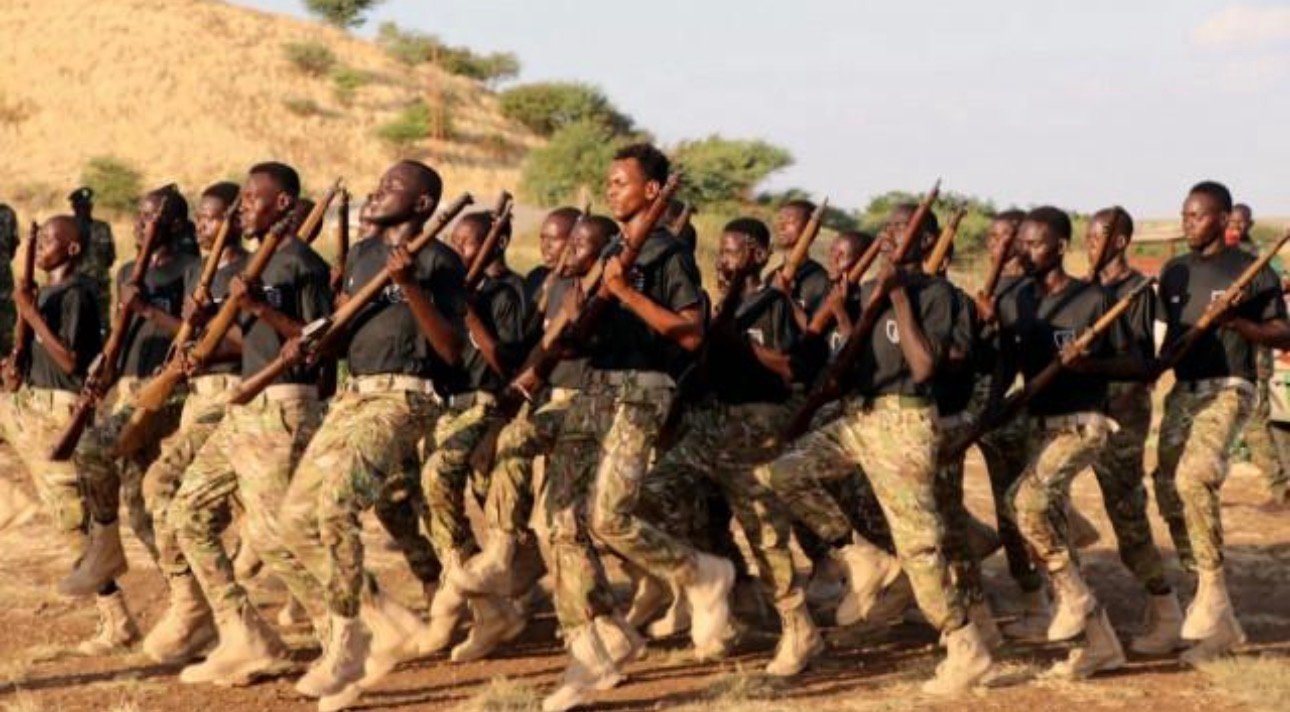
During its long years in power, the Sudanese Islamist movement historically linked to the Muslim Brotherhood managed to entrench its influence within sensitive state institutions, including the armed forces and intelligence services.
According to the magazine’s analysis, these networks did not disappear after 2019 but remained embedded within the institutional structure of the state. With the outbreak of the civil war on April 15, 2023, between the Sudanese Armed Forces and the Rapid Support Forces (RSF), these networks began to re-emerge as the political and security environment shifted.
In this context, Alan Boswell, director of the Horn of Africa Project at the International Crisis Group, notes:
“When a state enters a condition of war and institutional collapse, older networks within the security apparatus often reassert themselves and play a decisive role in reorganizing power and resources.”
War Reopens Channels with Iran
As fighting escalated and military stockpiles were depleted, authorities in Khartoum faced a fundamental challenge: securing continuous military supplies.
Within this context, rapprochement with Iran resurfaced facilitated in part through Islamist networks.
Historically, Sudan and Tehran developed a close partnership after the Islamist-backed coup in Sudan in 1989. Sudan allowed Iran to use logistical corridors across the Red Sea in exchange for military and economic support.
This relationship formally ended in 2016, when Sudan severed ties with Iran and closed its cultural centers in Khartoum in an effort to improve relations with Gulf states and break out of international isolation. The civil war, however, has altered those calculations.
According to the Horn Review analysis, the Sudanese Armed Forces reactivated cooperation channels with Iran after 2023, particularly as shortages of ammunition and equipment worsened.
Iranian Drones Enter the Battlefield
The clearest indicator of this cooperation has been the deployment of Iranian drones in the conflict. Reports issued by the UN Panel of Experts on Sudan indicate the use of Iranian systems such as the Mohajer-6 and Ababil-3.
These systems reportedly arrived through the port of Port Sudan, accompanied by technical assistance and operational training.
According to the magazine specializing in Horn of Africa and Red Sea affairs these drones have helped improve the ability of allied forces to manage combat operations within cities, particularly in the complex urban warfare environment that characterizes Sudan’s conflict.
Why Sudan Matters to Tehran
For Iran, the issue is not merely about backing one side in a civil war. Sudan occupies a pivotal position along the Red Sea corridor one of the world’s most important maritime routes linking the Middle East with East Africa and the Suez Canal.
Analysts believe Tehran aims to build a flexible network of influence along this corridor, relying on limited logistical nodes rather than permanent military bases.
In this regard, Mohanad Hage Ali of the Carnegie Endowment for International Peace explains that Iran’s regional strategy relies on building flexible influence networks instead of establishing direct military bases, noting that:
“Tehran seeks to create small logistical support points that allow it to extend influence across sensitive maritime corridors.”
Sudan offers an ideal setting: a long Red Sea coastline, weak state institutions, and an internal war that opens the door to external intervention.
The Ideological Dimension
What concerns some observers is not only the military cooperation but also the ideological background that may support it.
According to the Horn Review report, some Islamist actors within Sudan’s military establishment view relations with Iran through a broader lens than purely military interests.
Signals of this emerged last week when statements circulated from leaders of Islamist battalions fighting alongside the army expressing solidarity with Tehran during its attacks against Gulf states.
Although the authorities currently operating from Port Sudan said these remarks do not represent the official government position, they nevertheless reflect the persistence of ideological rhetoric within parts of the military establishment.
The Risk of Internationalizing the War
With the expansion of external involvement particularly from Iran analysts fear the Sudanese war could gradually evolve into an arena of regional competition.
The presence of external military support, combined with deeply rooted Islamist political networks, could make it difficult to end the conflict through a purely domestic settlement.
The Horn Review analysis suggests these dynamics may increasingly regionalize the conflict, with Sudan gradually becoming a strategic node within the broader contest over the Red Sea.
A State Caught Between War and Alliances
Ultimately, the foreign policy currently managed from Port Sudan reflects the reality of a state operating under the pressure of civil war and institutional collapse.
External military supplies, combined with the persistence of old networks within state institutions, are pushing Port Sudan toward a high-risk strategic posture.
Yet the larger question remains: can Sudan break out of this cycle before it becomes a permanent foothold in wider regional conflicts?
For now, the war shows no sign of nearing its end nor do the alliances reshaped by it appear likely to disappear anytime soon, particularly with the continued presence and influence of Islamist networks within the army.