Report: SPT
On July 8, the authorities in Port Sudan announced a new increase in the customs exchange rate of 6.41%, amid an accelerating economic collapse and a sharp decline in the value of the Sudanese pound, which depreciated to nearly SDG 6,000 per U.S. dollar. The devaluation has driven up prices of essential goods and further worsened living conditions already battered by the war.
Earlier, on July 4, Sudan’s central bank announced that it was withdrawing banknotes ranging from the 1-pound to the 50-pound denomination from circulation, after these smaller denominations lost their purchasing power to soaring inflation and rising prices.
Sources who spoke to SPT attributed the economic collapse and the pound’s decline to corruption and abuse of power by influential Islamists and military figures involved in smuggling strategic commodities such as gold and gum arabic, large-scale speculation in the dollar market, and the transfer of hard currency abroad. They also pointed to suspicious deals, most notably a copper agreement with China that began with a memorandum of understanding with the Chinese firm Norinco during General Abdel Fattah al-Burhan’s visit to Beijing in September 2024, and culminated in the signing of a $300 million, 30-year agreement with an undisclosed entity on June 21.
The sources added that the power blocs emerging from the military-Islamist alliance controlling the economy under the Port Sudan authorities are divided into four main groups: the first controls the oil sector, the second controls gold, the third controls the currency market, while the fourth controls money transfers and banking.
Economist Adel Khalafalla told SPT that Sudan’s economy had contracted by 43%, alongside the return of the Muslim Brotherhood’s patronage network within state institutions, reminiscent of the era of former President Omar al-Bashir. This has pushed more than 90% of the money supply outside the formal banking system, while allies of the former regime, in alliance with certain military figures, have come to dominate the oil and services sectors.
He added that this has triggered successive waves of currency depreciation against the dollar, in addition to turning the dollar and several other foreign currencies into commodities traded in their own thriving markets.
Khalafalla said the Islamists have repositioned themselves and reasserted control over state institutions, achieving near-total dominance over domestic and foreign trade through monopolization, favoritism and corruption.
Gold Smuggling
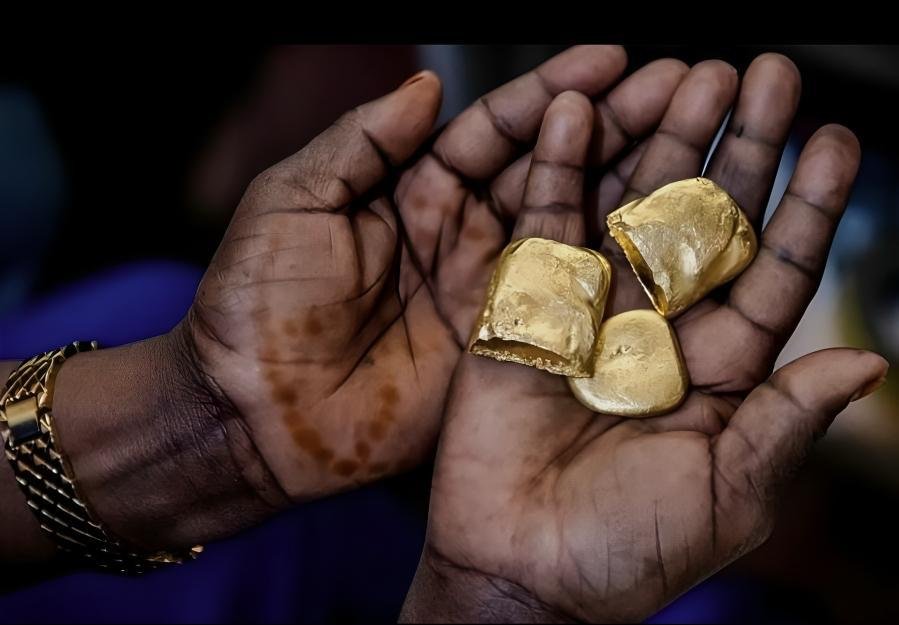
According to official Egyptian records, Egypt’s gold exports surged to $7.8 billion during the years of war in Sudan, a 137.5% increase. Data showed that Egypt’s total gold exports reached $7.6 billion by the end of last year, compared to about $3.2 billion in 2024, making gold one of the leading drivers of growth in Egypt’s non-oil exports.
Ehab Wassef, head of the Gold Division at the Federation of Egyptian Industries, said the sector achieved its best export performance in history during the first quarter of last year, with gold exports reaching $3.6 billion.
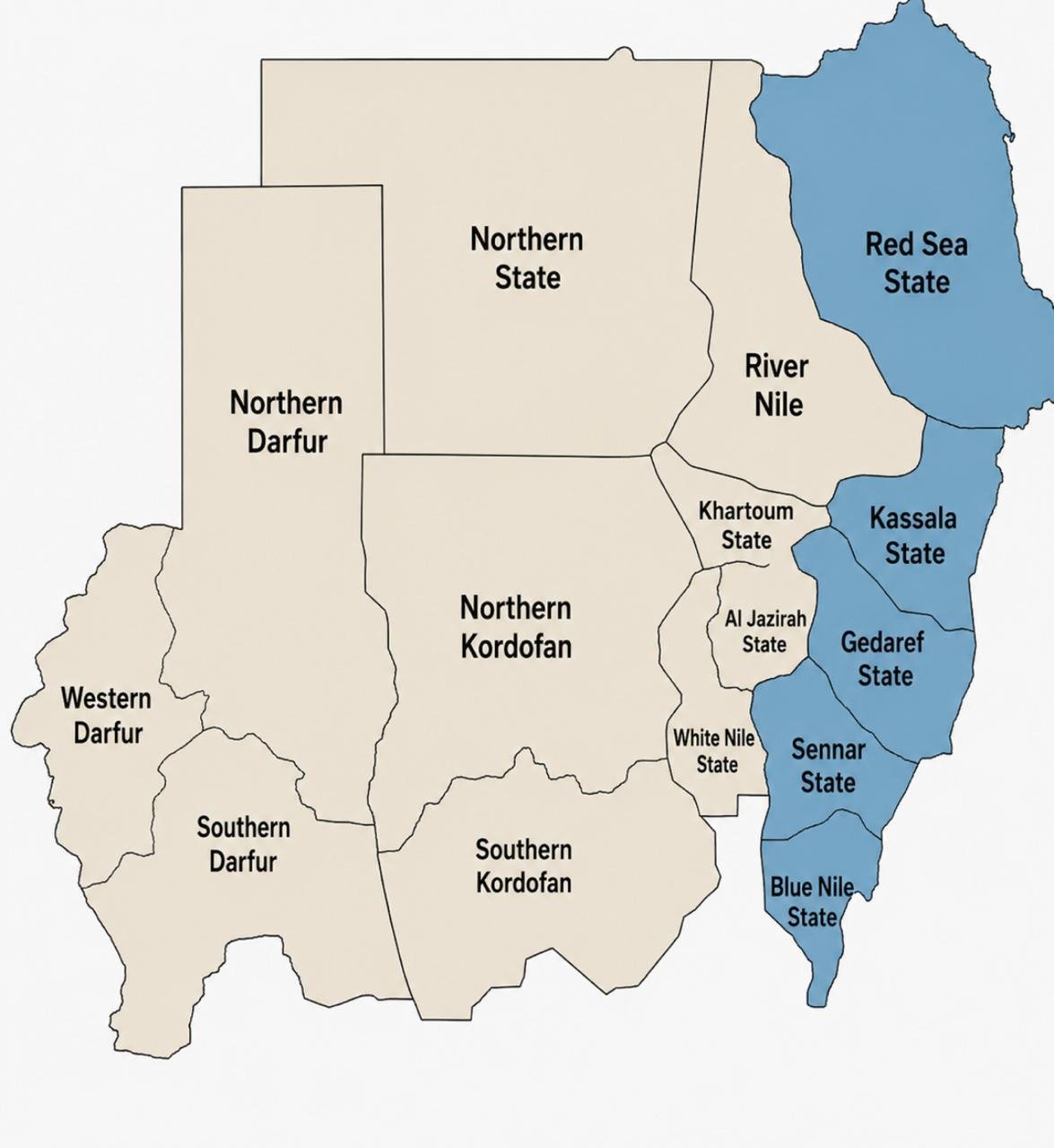
A source close to Sudan’s central bank told SPT that roughly 60% of smuggled Sudanese gold makes its way to Egypt, explaining that influential figures and businessmen connected to the authorities control informal and artisanal mining markets in the eastern and northern states.
The source added that these individuals buy gold at low prices before consolidating it for transport to Egypt, where the bars are re-smelted and their origin altered to appear as domestically produced gold, before being re-exported to global markets as an Egyptian product.
The source said: “Influential figures within the government exploit official border crossings, in coordination with Egyptian authorities, to smuggle massive quantities of Sudanese gold, aiming to secure rapid access to foreign currency, finance military spending, or accumulate personal fortunes away from any oversight.”
Gum Arabic Smuggling
According to Ahmed al-Tayeb, head of the Gum Arabic Exporters Division and a member of the National Chamber of Exporters, around 40% of Sudan’s total gum arabic production is currently smuggled outside official state channels across the border, with Egypt and Chad receiving the largest share.
Shipments of gum arabic smuggled by the military in Sudan are transported along the main northern route into Egypt. There, they are repackaged before being sold on the global market without sustainability and ethical practice certification that would confirm the commodity is free of conflict financing.
Experts at Sudanese trade chambers estimate that no less than 30,000 to 40,000 tons of smuggled Sudanese gum arabic have crossed into Egypt since the war began.
Egypt’s gum arabic exports began coinciding with the outbreak of war in Sudan, and have since surged at an annual growth rate of 532.6%, with shipment volumes from Egyptian ports more than quintupling during this period.
Total exported quantities reached 912 tons according to the latest recorded data, generating revenues of approximately $4,826,757, driven by a rise in global gum arabic prices to around $5.60 per kilogram.
In 2024, Egypt ranked seventh globally among gum arabic exporters for the first time, despite not possessing the acacia and hashab trees that produce gum arabic, which grow densely in Sudan’s gum arabic belt, a region that accounts for 80% of total global production.
Political Accountability
Observers, economists and political analysts place direct responsibility for these developments on the leadership of the military coup against the civilian transitional government, arguing that the overthrow of the democratic transition opened the door for the Islamists’ return to state institutions and unleashed corruption networks within the military establishment.
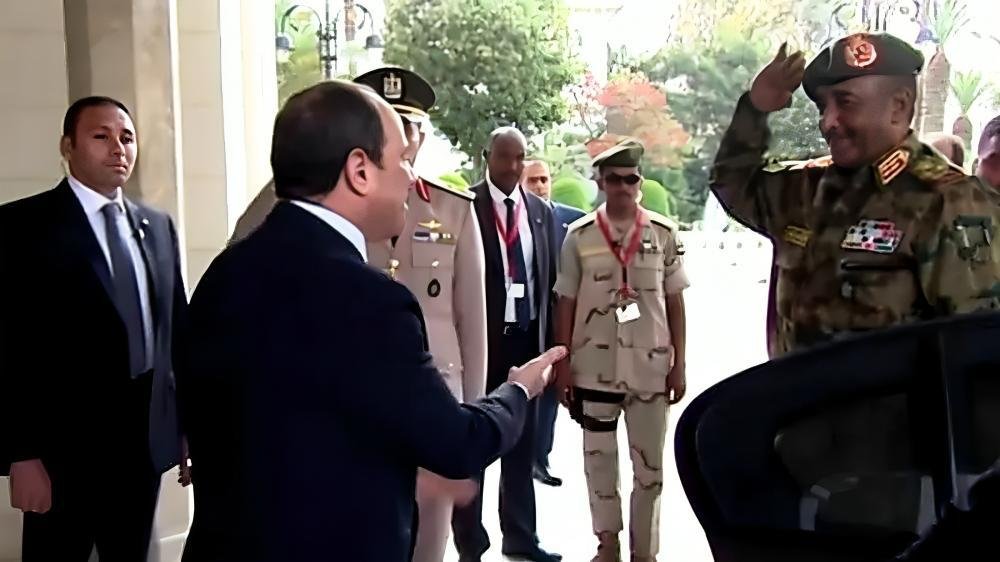
These observers point out that the alliance between Sudanese military leaders and their Egyptian counterparts, who control key levers of Egypt’s economy, has helped entrench a systematic plundering of Sudanese wealth and resources through the smuggling of gold and gum arabic and the conclusion of suspicious deals, including the copper agreement with China, in addition to channeling these proceeds into arms imports to sustain the war rather than end it.
Observers warn that the continuation of this pattern will deepen the economic collapse, exacerbating what the United Nations has described as the world’s worst humanitarian crisis, and will place the country’s future at risk for years to come, unless those responsible are held accountable and transparency is restored in the management of sovereign resources.
Conclusion
Between a pound that collapses daily, gold smuggled out and re-exported under another country’s name, and gum arabic produced by Sudan whose profits are reaped by others, a picture emerges of a state being plundered of its resources in broad daylight, while its people are driven further into hunger, poverty and collapse.
Taken together, these developments reveal that the economic crisis is no longer merely a byproduct of the war, but has become part of a broader system for managing power and wealth beyond oversight and accountability, amid the expansion of networks of influence and smuggling and the erosion of state institutions.
This economic hemorrhage, fueled by the absence of accountability and the entrenchment of corruption networks linked to those in power, will drive Sudan toward further fragmentation and collapse unless national forces and the international community act to halt the drain of the country’s resources, expose the flow of revenues and opaque deals, and rebuild a democratic civilian state founded on transparency and accountability rather than a system built on plunder and spoils.