
SPT
Amid Sudan’s brutal war, international attention has largely centered on abuses attributed to the Rapid Support Forces. This investigation, however, exposes another deeply harrowing dimension: the Sudanese Armed Forces, alongside Islamist militias aligned with them, have carried out large-scale killings, including atrocities in Gezira State in central Sudan, where violence has been driven by unmistakable ethnic motives.
According to a report produced by the investigative journalism outlet Lighthouse and aired by CNN, responsibility was attributed to Sudanese army commander General Abdel Fattah al-Burhan. The report, however, did not address the role of Sudan’s Islamic Movement, which has played a highly dangerous role in shaping the trajectory of the war since it erupted on 15 April 2023.
Available evidence indicates that individuals affiliated with the Islamic Movement operating within battalions and militias linked to it have been implicated in gruesome abuses, including slaughter, beheadings, disembowelment, and throwing victims from bridges. These groups are also believed to have played the most prominent role in the ethnic cleansing campaign that unfolded in Gezira State.
CNN appears not to have published these details for reasons that may relate to its own legal considerations. The Dutch newspaper Trouw, however, published the full Lighthouse report, documenting the role of Islamist groups in these atrocities.
Below, we publish the report in its entirety as released by the Dutch newspaper.
In Sudan’s bloody civil war, the world’s attention is focused primarily on the horrific killings committed by the Rapid Support Forces. However, new research shows that the Sudanese army is also guilty of large-scale ethnically motivated killings in the agricultural heart of the country.
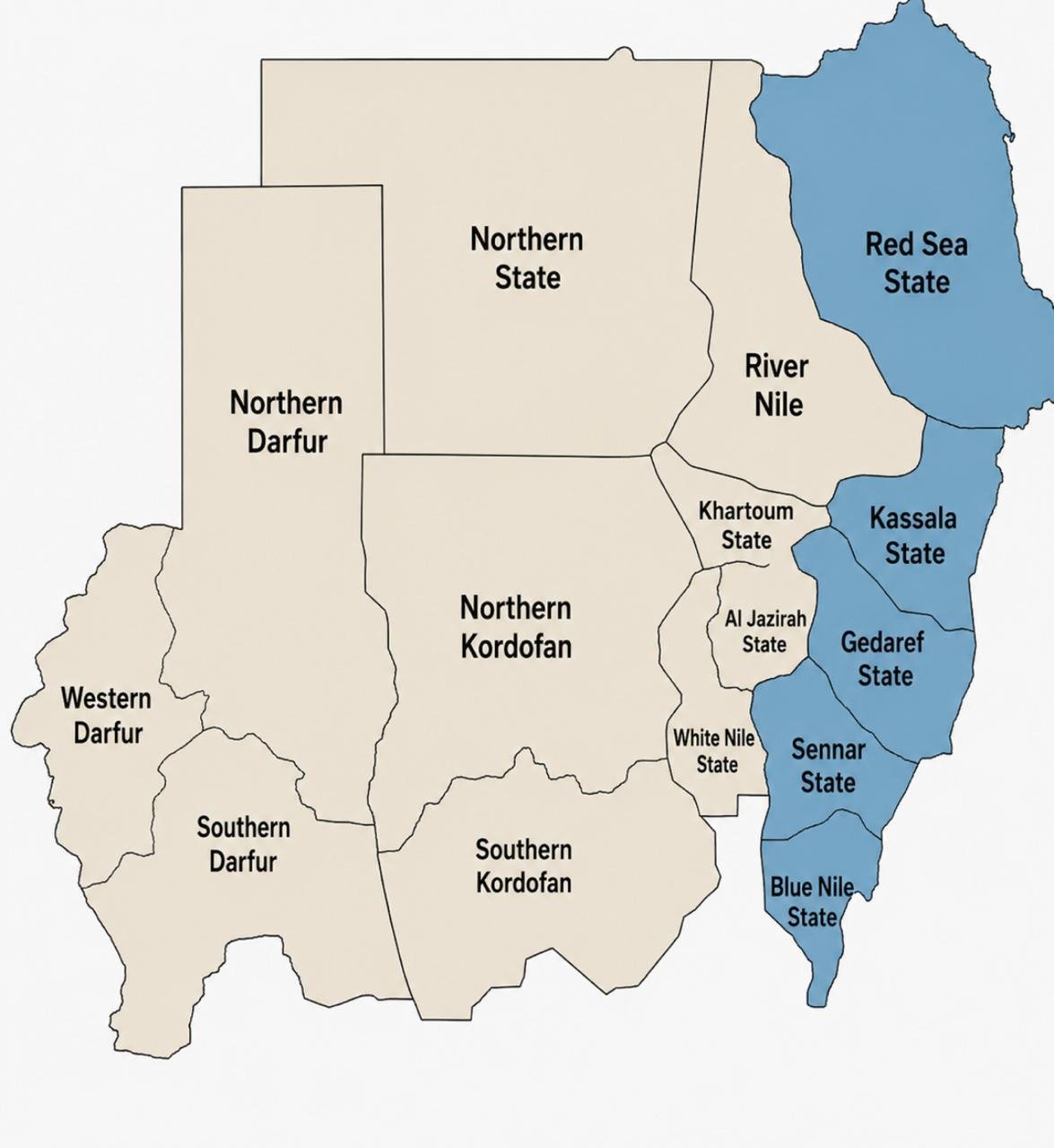
Death came with the evening sun. All day long, Miriam had watched the Sudanese army march through the streets of her hometown (we cannot mention the name of the village for security reasons). The village is located in central Sudan in the state of Gezira, near the banks of the Nile River. Shortly before the army entered, the village was occupied by the Rapid Support Forces (RSF), one of the world’s most feared militias, with whom the army has been engaged in a bloody struggle for power in the country since April 2023.
Forty-year-old Miriam had her four sons with her in the house: Mohammad (25), Abdeen (22), Aziz (20), and the youngest, Imad (18). Her brothers Suleiman and Anwar and a number of other women from the village had also come. They were all relieved that the army had moved in. Life under the RSF regime had been difficult due to the RSF’s looting. That relief lasted only a few hours.
Miriam belongs to the Kanabi, non-Arab black Sudanese farming communities originating mainly from the west and south of Sudan, who have been working the land in the state of Gezira for decades and are an integral part of the agricultural economy. Nevertheless, the Kanabi are marginalized by the Sudanese authorities dominated by the country’s Arab elite and rarely have access to good education and electricity, for example.
This investigation reveals that the army and its paramilitary groups have systematically attacked the Kanabi in an unprecedented orgy of ethnically motivated violence. The widespread attacks indicate “targeted extermination of people” and “ethnic cleansing,” which is a war crime, says Joy Ngozi Ezeilo, a member of the United Nations independent investigation team.
For the investigation, hundreds of videos were viewed, satellite images analyzed, more than a dozen survivors and witnesses interviewed, and five soldiers who were present at the killings interviewed.
The war has gripped Sudan for more than 2.5 years. At least 150,000 people have been killed, more than 12 million have been forced to flee their homes, and parts of the country are facing famine. In recent weeks, the atrocities committed by the RSF came to light when they took the city of El Fasher in the western region of Darfur and filmed themselves executing countless civilians, mainly non-Arabs.
According to human rights organizations and the United Nations, both the RSF and the army are guilty of war crimes. Both parties often target non-Arab populations in the country. Only the crimes committed by the Sudanese army during this war remain largely hidden.
Miriam also has to tell her story in secret, somewhere in a small dark room in a secret location in Sudan. If the authorities find out that she is talking to a journalist from Lighthouse Reports, her life will be in danger.
She recounts how the army did not stay long and moved on towards the state capital, Wad Madani. After the army came the men on motorcycles. Four of them stopped at her house. Three were wearing army uniforms, one was in civilian clothes with only a knife in his hand, another was limping and had dreadlocks hanging loosely over his shoulders. Miriam would recognize him immediately if she saw him again.
She cannot remember the men saying much. “They said that no one from the Blue Nile region was allowed to stay.” They were referring to an area where mainly non-Arab groups live. “Then they took only the men with them.”
Her sons and one of her brothers were forced onto motorcycles and driven to the roundabout near the village school, not far from their home. She does not know which shots killed her sons; by then, there was shooting everywhere and houses were being set on fire. Miriam and her brother Suleiman managed to escape.
For four days, the attackers did not allow anyone to enter the village, and all that time the bodies of Miriam’s sons and brother lay rotting in the scorching sun. When she was finally able to reach her children’s bodies, she saw that three of her sons and her brother had been shot in the back and that one of her sons had been killed with a bottle. Next to them lay the body of a young boy she knew from the village. Miriam did not know who was in charge of the attackers. She only knew that they belonged to the Sudan Shield Forces, one of the paramilitary groups fighting alongside the Sudanese army against the RSF.
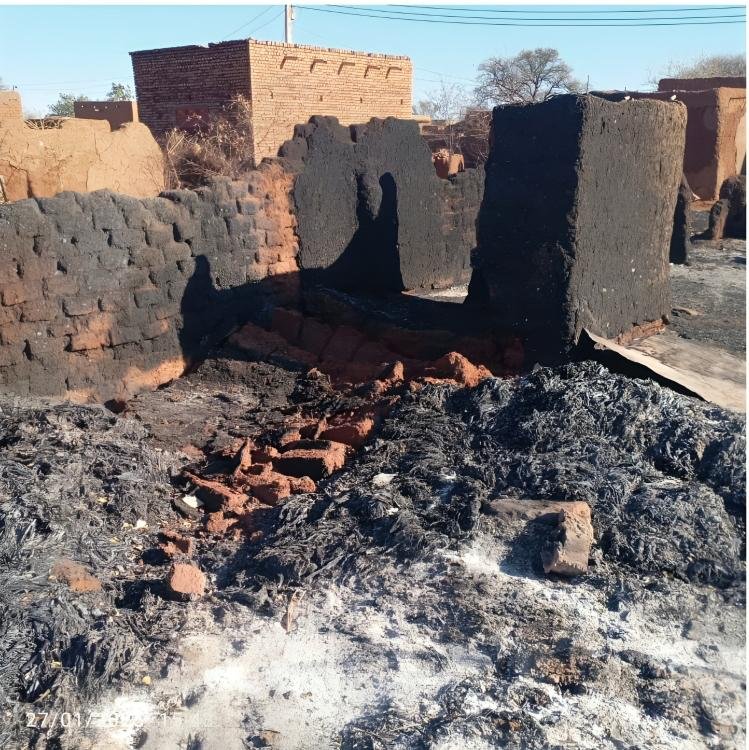
The village where Miriam and her sons lived was one of 144 farming villages, also known as kambos, which, according to sources in Sudan, were attacked by the Sudanese army and affiliated forces in Gezira and the neighboring state of Sennar. Fifty-seven of these attacks, carried out between October 2024 and May 2025, have been verified using public sources and eyewitnesses, among other means. The destruction of these villages shows that the military campaign goes beyond simply defeating the RSF.
The violence by the Sudanese army in Gezira culminates during the second week of January during the recapture of Wad Madani from the RSF. As the army, together with Sudan’s General Intelligence Service (GIS) and paramilitary groups, approaches the state capital on January 12, they ambush fleeing RSF troops on the outskirts of the city. This is evident from footage filmed and published by military and paramilitary personnel themselves at an intersection known as Police Bridge. The aftermath of the ambush is horrific. Wounded men scream in terror, bleeding profusely, charred bodies lie next to burned-out cars as the victors cheer.
Although the fighting ended in the early morning of January 12, the killing did not stop. The ground is littered with bodies, some in RSF uniforms, others in civilian clothes. One of the videos shows a man sitting on the ground, begging for his life. He is beaten until he bleeds. When a soldier accuses him of supporting the RSF, the man vehemently denies it. “I swear in the name of God that I am not with the RSF!” It does not help. He is shot dead with a volley of bullets. Another man has his throat slowly slit.
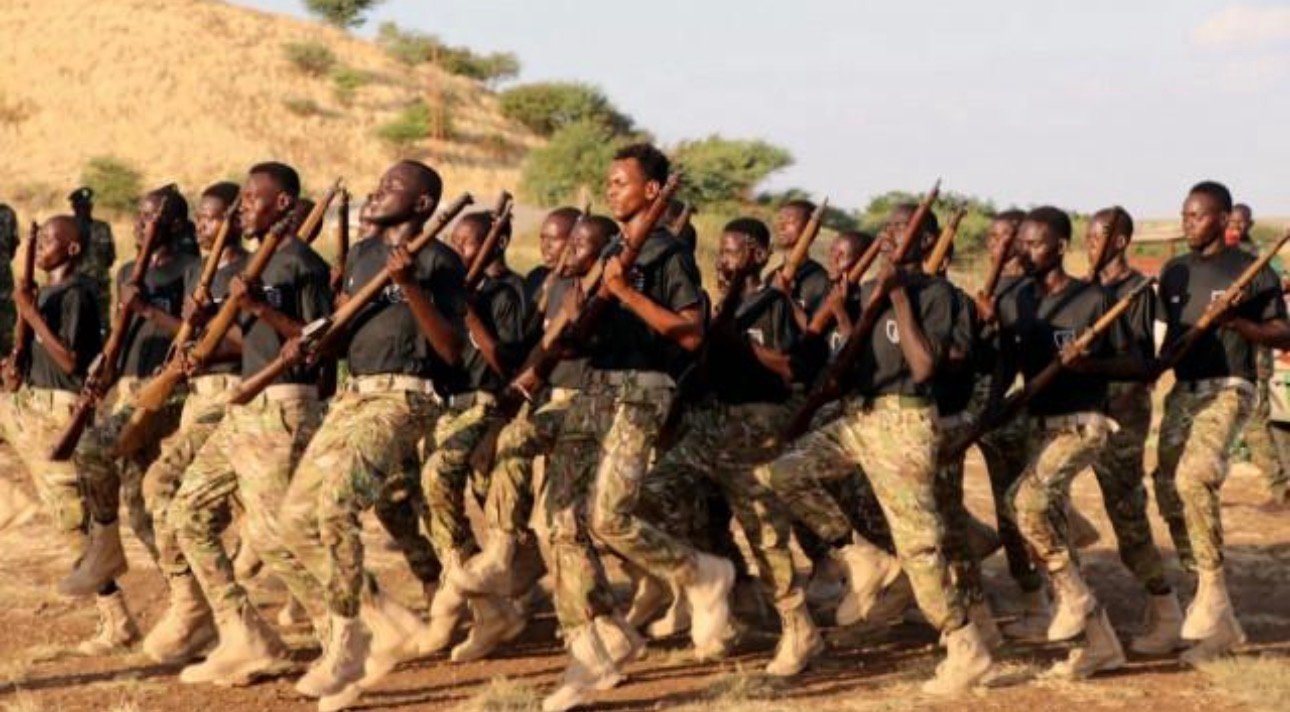
Videos from the following day show groups of soldiers sitting on plastic chairs in a courtyard near Police Bridge. Calm has clearly returned, the battlefield cleared of corpses and destroyed military equipment. Not only are soldiers from the Sudanese army and the GIS visible, but also from the Islamist forces of Al Bara’ Ibn Malik and the Sudan Shield Forces, two groups without whose support the army would never have been able to recapture large parts of Sudan from the RSF.
Just a few hours later, the same courtyard is the scene of a massacre. Five different videos show at least 50 bodies scattered across the courtyard. All are men, and none of them are wearing uniforms or carrying weapons. Some men have their hands tied behind their backs and are barefoot, others are lying against a wall in a pool of fresh blood, with gunshot wounds to their heads. A pair of crutches lies among the bodies. Several times, soldiers can be heard referring to the dead men as “foreigners,” a term with racist connotations.
A high-ranking GIS officer who was present during the attack confirms that they killed both civilians and RSF fighters. “When we entered Madani, we were greeted with cheers by the people. Mainly South Sudanese (he means non-Arab Sudanese) came out of their houses, but the soldiers started shooting at them and killed them all. There were hundreds of them. We put them in mass graves with the dead RSF using bulldozers.”
His account is confirmed by satellite images analyzed in collaboration with the Yale School of Public Health’s Humanitarian Research Lab. High-resolution images of the same location show how the earth has been turned over in at least five different places and there are white objects the size of bodies.
People were not only put in mass graves. With 4,300 kilometers of canals, Gezira has one of the world’s largest irrigation systems. One of the main canals flows between Bika, a town just outside Wad Madani, and the capital Khartoum. “We threw the people who had been shot into the canal,” says another soldier under the command of the GIS. “Most of them were dead, others were still alive.”
This is also evident from two videos posted online on January 17. They show at least eight bodies floating in the same canal where, according to military sources, bodies were thrown. The video was filmed on the outskirts of El Mielg, a place not far from Wad Madani. According to forensic expert and anthropologist Lawrence Owens, who studied the images, the bodies had been in the water for about a week. Some of them are naked, one has his hands tied behind his back.
Aisa, a student from Gezira, regularly saw corpses floating in the canal in the weeks after Wad Madani was captured. “Every two or three days, I saw bodies floating by. I think I saw about a hundred in total.”
This is also evident from satellite images from May of this year, a period when the canals dry up. Near Bika, dozens of white objects can be seen on the bottom, indicating bodies in white bags. It is only a few meters from the place where army leader and de facto head of the Sudanese government, Abdel Fatah Al Burhan, addresses his troops the day after the capture of Wad Madani, according to a video posted on the official social media channels of the Sudanese army.
The attack and ethnically motivated killings in Wad Madani are not isolated incidents. At least 57 Kambos were attacked and people of non-Arab appearance were detained, interrogated, and accused of collaborating with the RSF, according to Lighthouse’s investigation. In many cases, they were killed or imprisoned, says a representative of the Kanabi. “Soldiers and militias went from door to door and house to house. They took everything and burned what they couldn’t take.” According to him, the attacks have only one goal: to drive non-Arab groups off the fertile land. A Sudanese army soldier who was present during one of the attacks says he saw Sudan Shield Forces troops open fire on civilians. “I don’t know who gave the order, but it was clear that it had nothing to do with tracking down RSF collaborators. It was a liquidation operation.”
The plan for the attacks in Gezira is said to have come from Islamists in Sudan led by Ali Karti, the leader of the Islamic Movement. This is according to a senior GIS officer who was directly involved in the attack. It is confirmed by a former senior official who is still in regular contact with the leaders of the Sudanese army.
Since 2005, when Sudan was ruled by Islamists led by former dictator Omar Al Bashir, there has been a plan to drive the people off the agricultural lands of Gezira in order to sell them to investors from inside and outside Sudan. Ali Karti, one of the richest people in the country and initiator of several Arab militias, was part of Bashir’s government at the time.
According to two high-ranking sources, the attacks by the army and paramilitaries on the ground were coordinated by Lieutenant General Mohamad Abbas Al Labeeb, the deputy head of the GIS. Two other military sources confirm his involvement. Al Labeeb is said to have close ties with both Karti and army leader Burhan, who is believed to have been aware of the attacks.
Minni Minawi, the governor of Darfur and former rebel leader whose troops have joined the army, acknowledges in an interview in Port Sudan that killings have taken place in Wad Madani. “As soon as I heard about it, I ordered my men to stop the killings.”
The Sudanese army dismissed the killings as isolated incidents and announced in January that it would launch an investigation. The progress of the investigation is unknown.
Reaction from the SAF and others
The effect of 2.5 years of war on agricultural land is also visible from the air. Using remote sensing techniques, it is possible to measure how green the crops in Gezira are compared to previous years. In the vast majority of the state, there has been a decline in healthy crops of more than 25% compared to the three years before the war. And while there is a severe food shortage in Sudan, the Kanabi say they cannot return to their villages to rebuild their homes and work the land because of roaming paramilitary groups that are keeping them away.
Miriam has returned once to the graves of her sons and brother. “The grief for my children is enormous.” All she has left of them are four photos on her phone. She shows them lovingly and sadly. Her boys look cheerfully into the camera with their hands in their pockets or standing tough in the waters of the Nile while making the peace sign.
– The names of the survivors are known to the editors, as are those of the soldiers who could not be named for their own safety.