

Report: SPT
Executive Summary
As the war between the Sudanese Armed Forces and the Rapid Support Forces intensifies since April 2023, Sudan’s Islamist movement has re-emerged as a shadow player seeking to reclaim power. It now operates through a military wing led by the Al-Baraa Ibn Malik Battalion and a new civilian front known as the “Civilian Support Sector.” The movement is restructuring itself under prominent figures from the Bashir era, drawing inspiration from Hamas’s model of blending arms, services, and social control. Analysts warn that this project represents an existential threat to the Sudanese state, putting the country at a critical crossroads: either dismantle the Islamists’ renewed grip or face a more lethal and extreme version of the previous regime.
The Military Arm: Al-Baraa Ibn Malik Battalion
In the midst of Sudan’s raging conflict since April 15, 2023, between the army and the Rapid Support Forces, the Sudanese Islamist movement has positioned itself as a key actor determined to return to power. Having lost authority after a popular uprising, it now directs major military and political operations through armed militias and civilian fronts.
At the center of this effort stands the Al-Baraa Ibn Malik Battalion, widely regarded as one of the movement’s most important combat units and its primary gateway back to power. Alongside this force, the Islamists maintain tight control over the leadership of the official security and intelligence apparatus.
Civilian Support: Governance from the Shadows
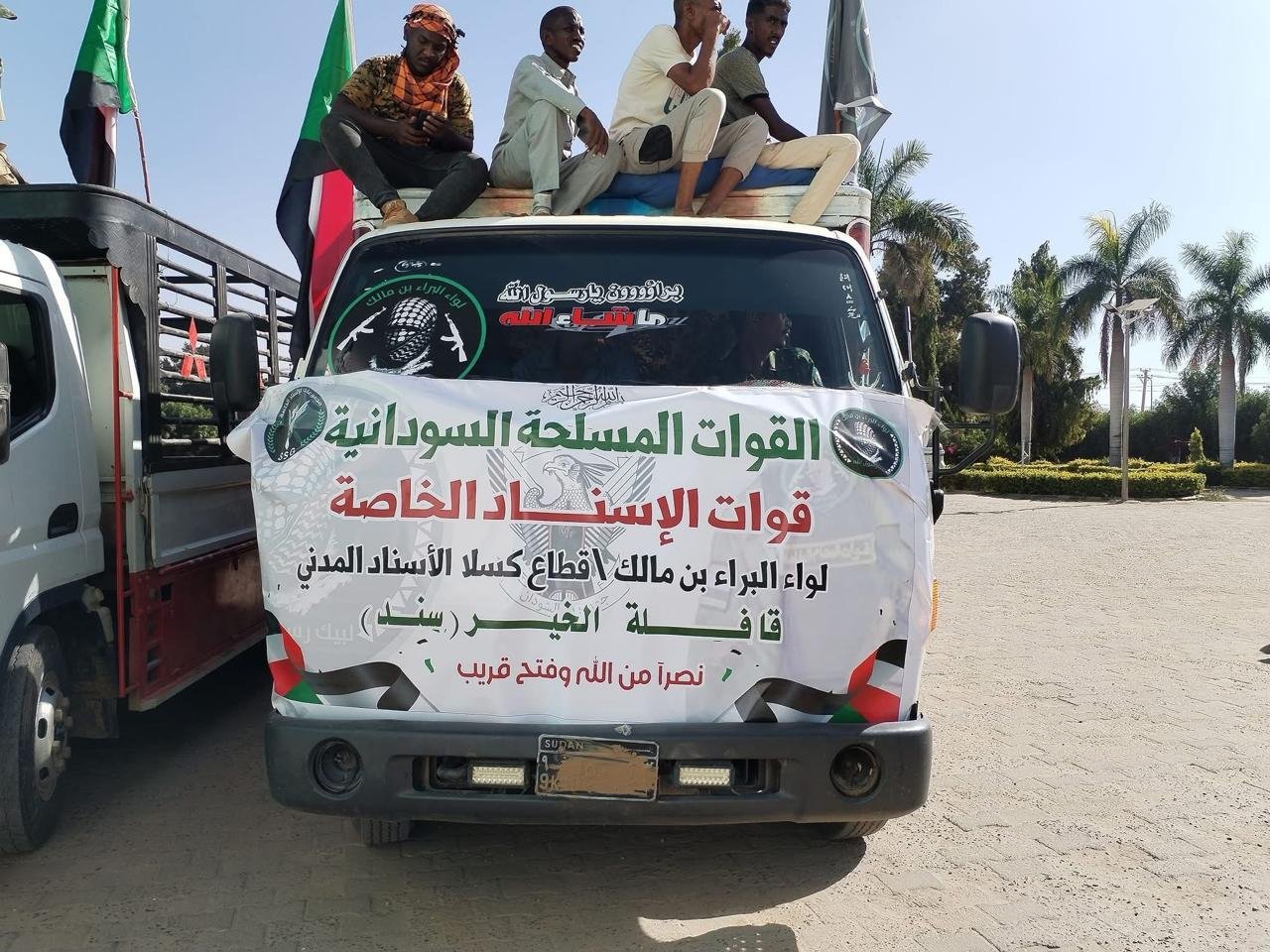
The threat, however, extends beyond the battlefield. Through the Al-Baraa Battalion, the Islamists established a civilian structure called the “Civilian Support Sector.” This body oversees public services and administrative functions in territories under their control. Designed along the lines of Hamas’s “Support Forces” in Gaza, Islamists interviewed for this report admitted the model was directly inspired by Hamas.
Observers say this framework marks a covert return of Sudan’s Islamist movement to full governance, with its hands once again on the levers of the state.
The Civilian Support Sector’s mandate spans a wide range of services: humanitarian relief, hospital rehabilitation, provision of medicine, sanitation campaigns, pest control, maintenance of schools, roads, electricity, and water networks, and even agricultural supplies.
Leadership in the Shadows and Accusations of Fascism
According to Islamist insiders, the Civilian Support Sector operates under the direct supervision of Ali Osman Mohammed Taha, the veteran Islamist leader and former senior figure in Omar al-Bashir’s regime, now regarded as the movement’s spiritual guide. He is assisted by Ali Karti, the current secretary-general of the Islamist movement, and Ahmed Haroun, chairman of the National Congress Party and a fugitive wanted by the International Criminal Court.
Babikir Faisal, a leader in the Sumood coalition and head of the executive office of the Federal Democratic Gathering, told us:
“The fascist Islamist movement, after being rejected by the Sudanese people and igniting the war, decided to hide the faces of its well-known leaders and operate through fronts, chief among them the Al-Baraa Battalion. The movement believes large segments of Sudanese society will tolerate their presence because they fought on their behalf in the war. But behind them lurk the priests of death and blood, such as Ali Osman Mohammed Taha, who leads what they call the Civilian Support, aided by Ali Karti and Ahmed Haroun, while Idris Mohammed Abdel Qader directs field operations in direct contact with the militias.”
He added:
“We will not be fooled by the tactics of these killers and criminals hiding behind facades. We will confront them head-on.”
Currently, the Civilian Support Sector operates across 11 states under army control, with offices in each state capital flying the flag of the Al-Baraa Battalion.
An Existential Threat to the Sudanese State
Dr. Nasredeen Abdulbari, former Justice Minister in Sudan’s transitional civilian government and senior fellow at the Atlantic Council in Washington, explained:
“The Civilian Support Sector is, in fact, the new front for Islamists to tighten their grip over state bureaucratic institutions and maintain power after the army reinstated those dismissed by the Empowerment Removal Committee following the October 25, 2021 coup.”
In June, the movement appointed Mohammed Abbas Mohammed as head of the Civilian Support Sector. A veteran Islamist fighter and deputy to Al-Misbah Talha, commander of the Al-Baraa Battalion, he now oversees the structure alongside two deputies and 11 provincial assistants.
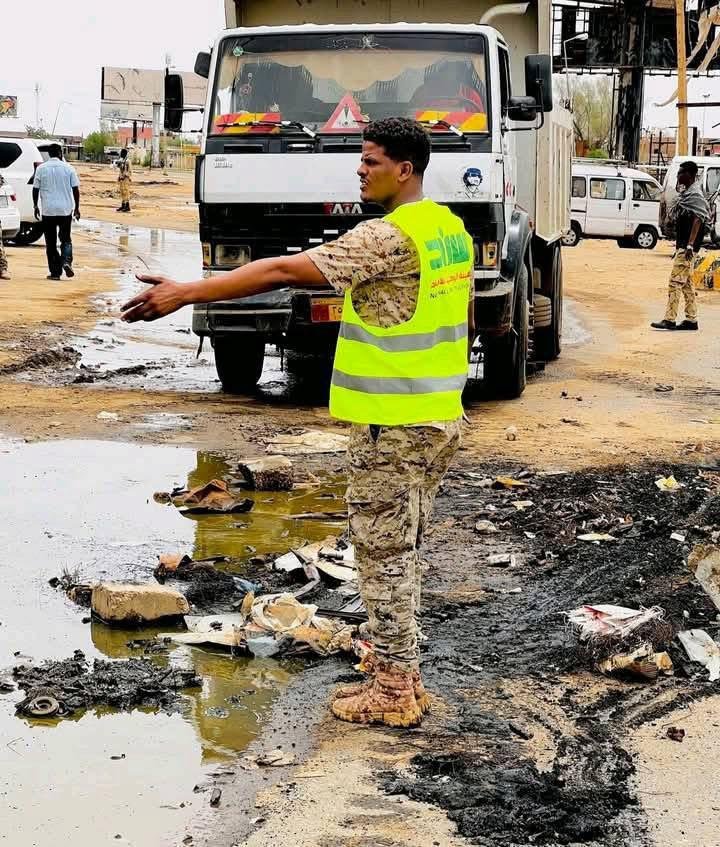
The sector’s activities are funded covertly from government maintenance and service budgets in each state, in addition to private donations from Islamist members. These contributions are funneled to a bank account at Bank of Khartoum (Account No. 1547232) under the name Jubeir Ahmed Al-Sadiq, the sector’s financial officer and one of its deputy leaders. Al-Sadiq, a hardline Islamist militant, previously fought in Libya.
A retired army general, speaking on condition of anonymity, warned:
“The Civilian Support Sector is not just a cover for the Islamists’ return, it is a political shield for rogue militias. Allowing it to expand within civil service structures does not only mean reproducing Islamist rule in a new guise, but also bringing armed religious militias into state authority. This is an existential threat to the Sudanese state.”
As the war drags on and the humanitarian toll escalates, this project emerges as a decisive test: either the international community forces General Abdel Fattah al-Burhan, the army commander, to sever ties with the Islamists, or Sudan faces the rise of a local version of (Hamas) blending weapons, governance, and society under a single banner, more ruthless and extreme than the previous regime that lasted three decades before being toppled in the 2019 popular revolution.